Talk To Our Boss If You Didn't Find The Solution
Our boss, Alanna will ask our team to find out the solution very soon! You must be satisfied with our services!


I first clocked this as “packaging cosplay” when I watched a line of perfectly rational adults pay premium money for sushi they could’ve bought three blocks away—because the tube made it feel like an event, and the event made it feel like a product, and the product made it filmable.
It works. Usually.
But don’t confuse novelty with innovation. The sushi push pop tube is, bluntly, a mechanism wrapped around normal rolls—stack height, friction, moisture control, and a lid that doesn’t pop in a delivery bag, all pretending to be culinary invention. Who’s really driving this, chefs… or brand managers?
Here’s my bias: I frankly believe most “viral packaging” succeeds because it removes decision fatigue. Customers instantly understand how to hold it, how to eat it, how to show it off. Operators love it because it’s a mini billboard that rides home in someone’s hand.
And yeah—there’s a poster child. Food & Wine describes a New York shop (Suka Sushi) selling the “push-pop sushi” version in a branded cardboard tube, with a soy-sauce tube acting as the pusher, priced roughly $15–$17 and pulling lines mainly because the format is weirdly fun.
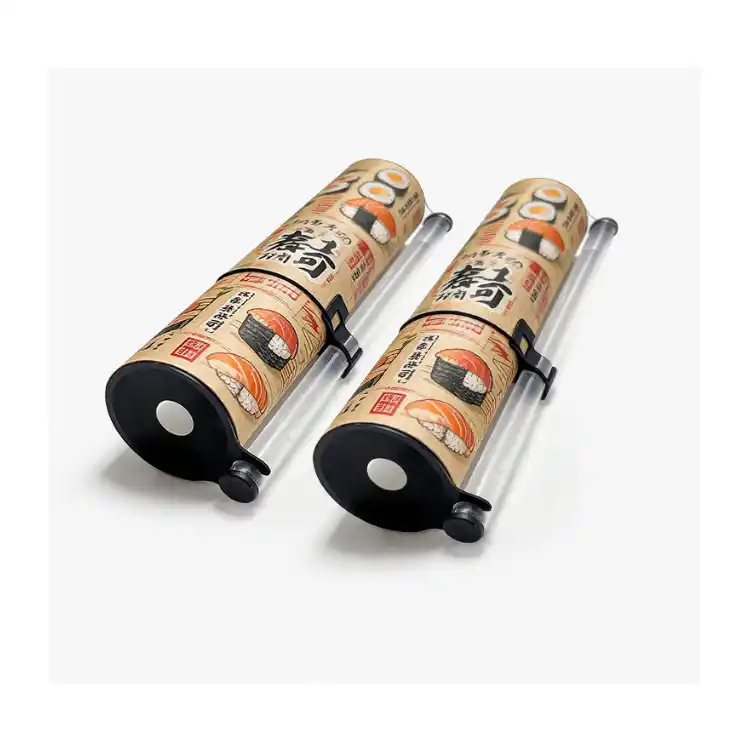
A sushi push pop tube is basically sushi to-go packaging that forces vertical stacking: pre-cut roll segments loaded into a cylinder, then pushed upward as you eat, one chunk at a time. That’s it. No magic. The magic is that customers do the “unboxing” with their mouths.
Yet the ugly truth is this: the tube format is rarely simpler. It’s more SKUs. More tolerance stacking. More “why is the liner wrinkling” calls at 11 p.m. More QC grief.
Three words: camera-first consumption.
A tray is flat. A tube is a prop. It gives you the reveal, the hand-shot framing, the “push-up sushi tube” moment where the product literally moves (motion sells, always has). Also, it gives you label real estate—big wrap, QR codes, promo, brand marks—without paying for a huge box.
And the market tailwind is real. Global Market Insights puts the food service packaging market at $131.48B in 2023, forecasting continued growth (they cite ~4.9% CAGR into 2024–2032). That’s a lot of money chasing “new” formats.
So, yes, “sushi tube packaging” is partly social media. But it’s also procurement: brands looking for a format that stacks better, travels cleaner, and looks premium without upgrading the fish.
I’ve seen this break down into the same parts over and over:
The niche jargon that matters: seal creep, wet-out, COA, migration testing, MOQ, stack compression, friction coefficient. If your supplier can’t talk those basics, run.
If you’re trying to understand what the tube category looks like on the supplier side, start with a dedicated paper tube packaging catalog and read it like a spec sheet, not a mood board.
PFAS. CERCLA. Two acronyms, one headache.
California is not subtle about PFAS in plant-fiber food packaging: restrictions have applied since January 1, 2023, and the threshold often cited is 100 ppm measured as total organic fluorine for certain plant-fiber food packaging categories. If your “paper” tube relies on a grease barrier and you don’t know what chemistry is in that coating… you’re guessing.
Now zoom out to Europe. The EU has been explicitly tightening rules around packaging and packaging waste; the Council’s March 4, 2024 release makes the direction obvious—less waste, more constraints, more scrutiny.
And the U.S. regulatory temperature around PFAS keeps rising. In April 2024, EPA designated PFOA (C₇F₁₅COOH) and PFOS (C₈F₁₇SO₃H) as hazardous substances under CERCLA—meaning liability and reporting conversations get louder across supply chains (even if your tube isn’t the polluter, you still get dragged into compliance culture).
So when I hear “eco-friendly,” I ask one question: show me the test method and the supply chain paperwork. Not vibes. Not green ink.
It’s messy.
A paper tube plus polymer liner plus adhesive seam plus ink plus food residue is basically a recycling center’s least favorite thing. Municipal systems choke on mixed-material, food-contaminated packaging. That’s not ideology; that’s sorting reality.
And the waste numbers are ugly. Eurostat reports 79.7 million tonnes of packaging waste in the EU in 2023—about 177.8 kg per person. The “we’ll just recycle it” story gets shakier when you look at that scale.
If you want a more defensible approach, you simplify parts, avoid fluorinated barrier chemistry, and print like an adult (less ink coverage, fewer laminates). Vendors with integrated printing services for packaging can reduce supplier sprawl—if they’re actually fluent in food-contact constraints and not just finishing tricks.
Here’s the part people skip.
Rice dries. Nori turns limp. Condensation pools. If the tube traps moisture, you get soggy seaweed; if it breathes too much, you get rice that eats like gravel. And because the customer is physically pushing the product upward, any cut inconsistency becomes a tactile disaster (sticky seams, smear lines, broken segments). Nobody posts that version.
If you’re launching “sushi push pop” as a real menu item, you’re building a micro assembly line: cut consistency, load order, compression force, closure QA, and delivery testing under vibration and crush. That’s not romance. That’s production.
Here’s how I’d frame the trade-offs for operators who want data, not hype.
| Packaging format | Stackability | Leak resistance | Protection from deformation | “Shareability” | Compliance risk hot spots | Typical end-of-life reality |
|---|---|---|---|---|---|---|
| Plastic clamshell tray | Medium | Medium | Low–Medium | Low | Plastic bans in some markets | Often landfill (food contamination) |
| Paper sushi tray + lid | Medium | Low–Medium | Low | Low | PFAS/barrier coatings (state/EU focus) | Mixed outcomes; depends on coating |
| Paperboard push pop tube | High | Medium | High | High | PFAS thresholds; liner chemistry | Frequently landfill due to mixed materials |
| Rigid plastic push pop tube | High | High | High | High | Plastic restrictions; reuse claims scrutiny | Recyclable in theory, rare in practice |
If you’re sourcing, I’d scan a supplier’s broader packaging products range before you believe their “we can do anything” pitch—capability shows up in the catalog, not the sales email.
Because it sells “experience,” not fish.
A sushi push pop container gives you price lift without changing ingredient cost much. It also forces brand exposure during eating—your logo is literally in the customer’s hand for the whole session. That’s not an accident.
And if you’re trying to scale, don’t guess at repeatability. Look for customer case studies, then demand the unsexy details: liner spec, friction tolerance, closure integrity, migration tests, and what happens after 30 minutes in a warm delivery bag.
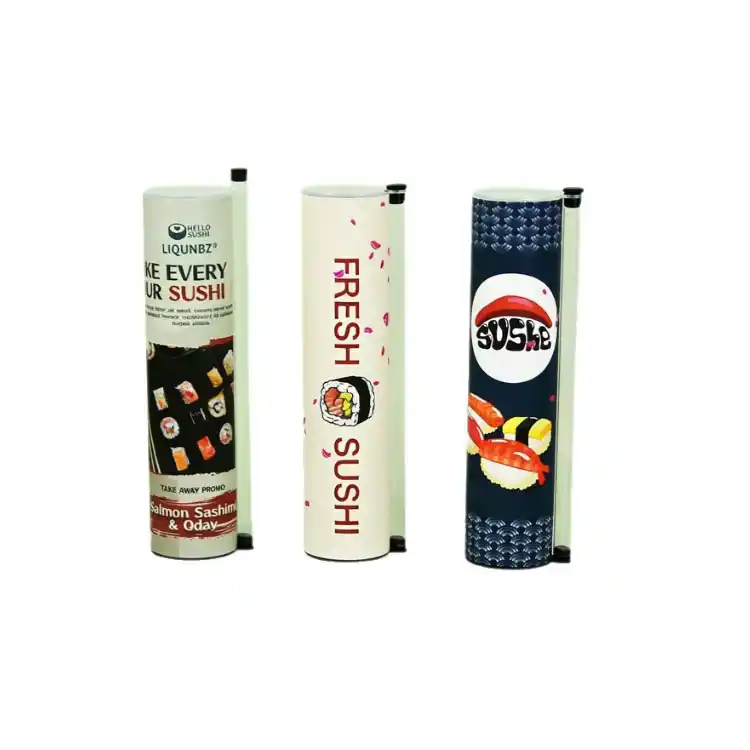
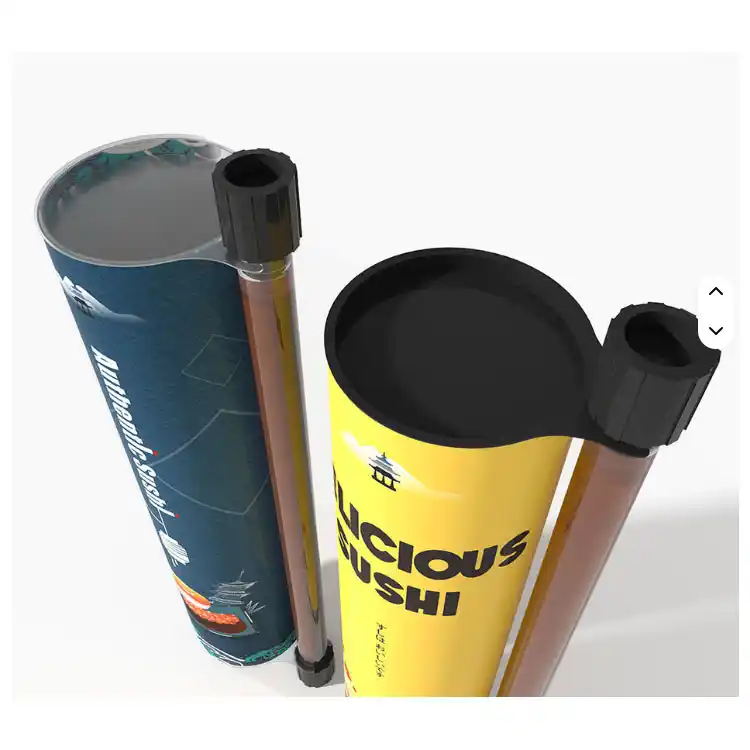
A sushi push pop tube is a cylindrical, single-serve sushi push pop container that stacks pre-cut sushi pieces vertically so the eater can push them upward from the bottom and eat sequentially at the top, trading flat trays for portability, branding surface, and a built-in “reveal” moment.
From my experience watching launches, it’s packaging-driven theater that can still solve real delivery deformation problems.
A sushi push pop tube works by loading sushi pieces into a snug cylinder and using a bottom plunger (or a small pusher) to move pieces upward through controlled friction, so each bite pops out at the top without opening a tray, ideally staying aligned and clean during transit.
When it fails, it jams or slumps—both are basically friction/tolerance problems, not “chef problems.”
Sushi push pop packaging is only eco-friendly when its full bill of materials—tube, liner, adhesives, inks, and coatings—avoids restricted chemistries and matches local recycling/composting pathways, because “paper” formats often rely on moisture/grease barriers that trigger PFAS scrutiny and undermine recoverability in practice.
Here’s the ugly truth: most “eco” claims die the moment a plastic liner shows up.
Sushi tube packaging most commonly uses spiral-wound paperboard tubes with polymer liners or rigid plastics like PP (#5) and PET (#1), paired with a plastic plunger and a snap/peel closure, because sushi demands moisture management, oil resistance, and enough rigidity to prevent roll deformation under stacking and delivery compression.
If a supplier can’t name the liner and provide food-contact documentation, don’t place the PO.
Sushi to-go packaging in 2024 is shaped by accelerating PFAS restrictions for plant-fiber food packaging (California’s rules already apply) and tighter EU packaging-and-waste rules that increase compliance pressure, while U.S. PFAS enforcement context has intensified after EPA’s hazardous substance designations under CERCLA for key PFAS chemicals.
Translation: if you sell across jurisdictions, you need a compliance matrix—not hope.
A push-up sushi tube holds up in delivery when the closure resists popping, the liner prevents rice adhesion and moisture migration, and the internal fit keeps pieces aligned under vibration and stacking forces, because the format can protect shape but can also trap condensation that wrecks nori and texture if engineered poorly.
Test it in real bags, in real heat, for real time—your Instagram comments aren’t a QA lab.
If you’re serious about launching a sushi push pop tube (not just chasing a trend), treat it like a regulated package system: lock specs, validate liners, and stress-test closures before you print anything flashy. Start by reviewing custom food packaging options, then move straight to request a quote for custom tubes once you’ve nailed dimensions, closure style, and where you’re actually selling.