Talk To Our Boss If You Didn't Find The Solution
Our boss, Alanna will ask our team to find out the solution very soon! You must be satisfied with our services!


Premium is friction.
Not decoration, not another gold-foil logo, not a bigger box that makes a $38 bracelet look like it was kidnapped by its own packaging. When I judge Jewelry Boxes, I watch the hand before I watch the face: how the buyer grips the pack, how slowly it opens, whether the product stays centered, whether the insert fights back, and whether the whole thing feels intentional or merely expensive.
So which feels more premium: a magnetic jewelry box or a drawer jewelry box?
For most single jewelry pieces, I’ll take the drawer. Every time.
But there is a catch. Magnetic closure jewelry boxes can feel more premium when the product deserves a larger presentation field: necklace sets, wedding gifting, multi-piece bundles, PR kits, VIP customer packaging, or anything that benefits from opening like a case rather than sliding like a secret. The problem is that too many brands use magnetic boxes as a shortcut for luxury. That shortcut is getting expensive.
The U.S. Census Bureau reported that e-commerce accounted for 16.1% of total U.S. retail sales in 2024, and its 2025 figure moved to 16.4%, which means more jewelry packaging now has to survive parcel handling, doorstep delivery, and kitchen-counter unboxing rather than boutique-only lighting. (Census.gov) That changes the argument. A box is no longer only a display object. It is a shipping object with an emotional job.
And customers notice. A 2024 Mondi e-commerce packaging survey found that 47% of consumers would be put off buying again if there was too much packaging; the same report named overpackaging, hard-to-recycle packaging, and unpleasant opening experiences as consumer annoyances.That should scare any jewelry brand still mistaking oversized magnetic packaging for status.
If you want the broader structural context before choosing samples, Zhibang’s rigid box styles guide for two-piece, drawer, and magnetic lid boxes is the internal page I would place directly in the buyer journey here because it gives procurement teams a cleaner way to compare formats before they waste money on cosmetic mockups.
Drawer boxes understand suspense.
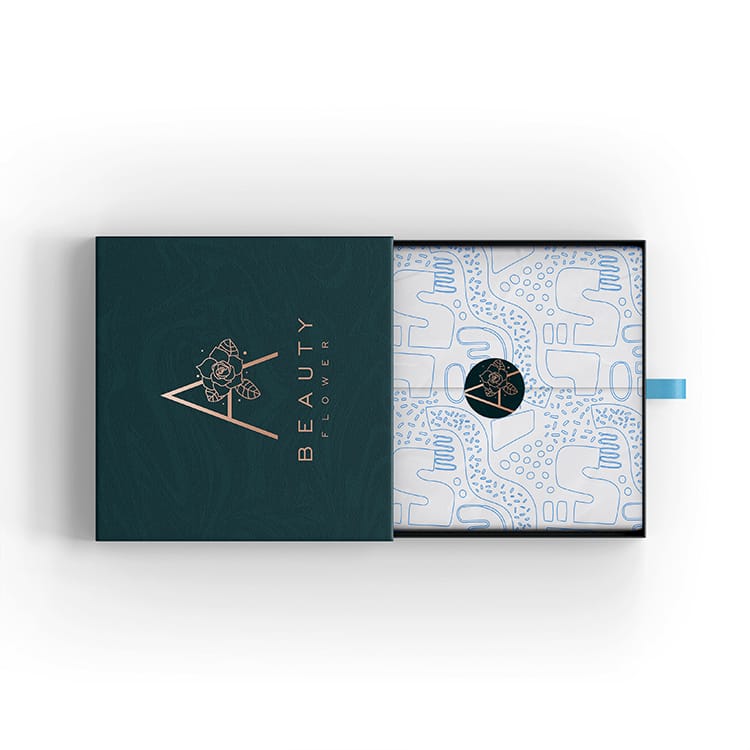
A drawer style jewelry box creates a controlled reveal because the customer has to pull the tray out in stages: first resistance, then movement, then the product appears. That rhythm matters for rings, anklets, chains, bracelets, pendants, and earrings because jewelry is usually small, shiny, and easy to visually underwhelm if the package is too large.
Weight lies first.
When a customer picks up a jewelry package, the brain starts making value judgments before the lid moves, and a compact drawer box with dense board, snug sleeve friction, and a flush insert can feel richer than a larger magnetic box because there is less empty air between the hand and the product. Isn’t that the point?
I have a blunt rule for small jewelry: the box should not look wealthier than the product. If the package screams while the jewelry whispers, the brand has lost control of the scene. A drawer box avoids that failure because it narrows the theater. It says: look here, slowly.
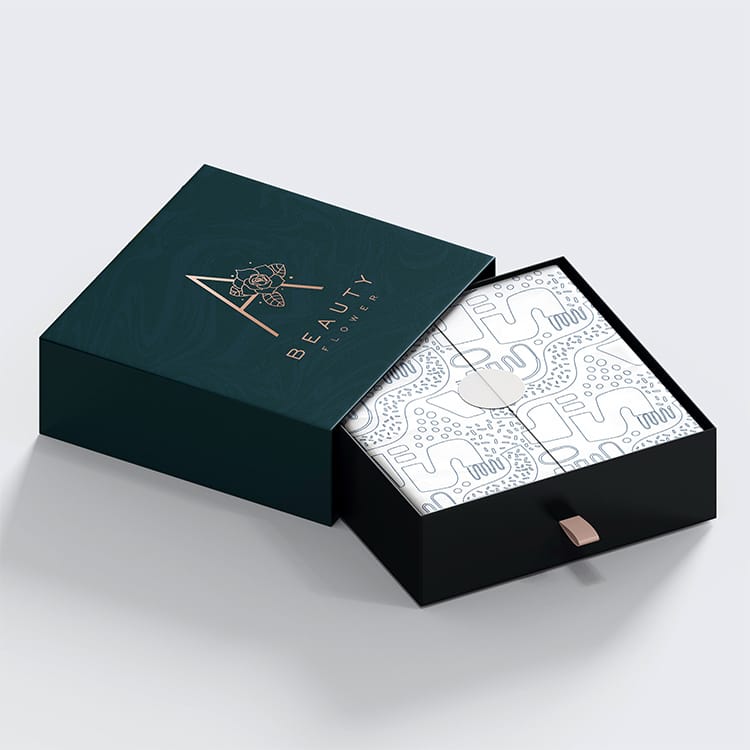
That is why a custom luxury sliding drawer jewelry gift box with pouch makes sense for brands trying to sell intimacy rather than spectacle. The listed structure uses 1200 GSM rigid paper and 157 GSM linen paper, with CMYK printing, hot foil stamping, matte lamination, and spot UV—exactly the sort of tactile stack that can make a small product feel held, not merely boxed.
The drawer format also gives the insert less room to fail. Jewelry moves. Chains tangle. Earrings rotate. Bracelets collapse into odd little metal smiles. A sleeve-and-tray structure pushes the designer toward a tighter cavity, a better pouch decision, and more honest dimensions. That is not glamorous. It is the whole game.
Magnetic boxes photograph well. I admit it.
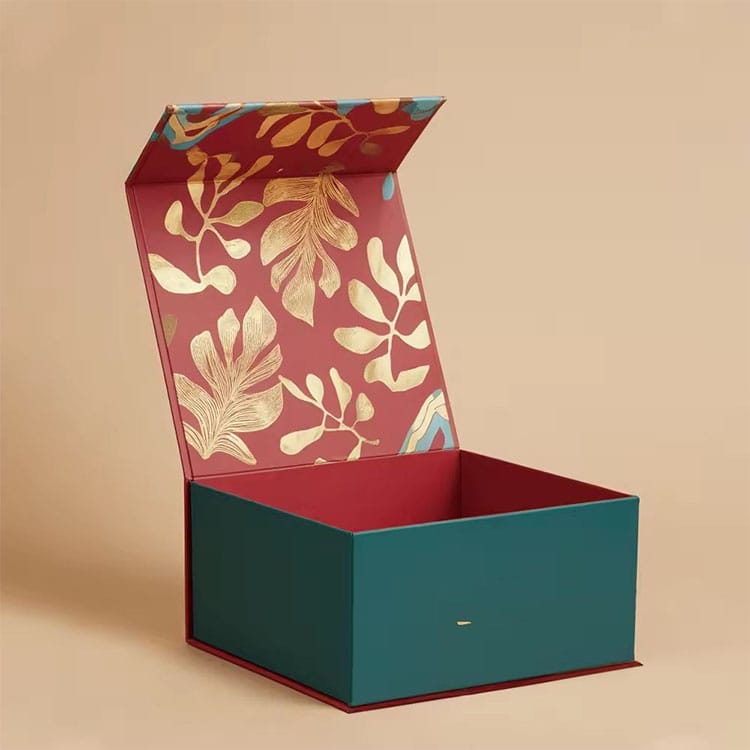
A magnetic closure jewelry box gives you a bigger front panel, a hinged opening, a satisfying closing snap, and a presentation surface that works for social video. It can feel expensive before the customer even reaches the product, especially when paired with soft-touch paper, foil stamping, ribbon, EVA foam, velvet flocking, or a layered paper insert.
But here is the industry’s uncomfortable truth: magnetic boxes are often overused because they let weak brands buy drama.
A hidden magnet—sometimes ferrite, sometimes neodymium-based material such as Nd₂Fe₁₄B in higher-strength applications—does not automatically make a box premium. It makes the closure more theatrical. That is different. If the board is thin, the hinge wrinkles, the flap alignment is off by 1.5 mm, or the insert looks like a cheap foam afterthought, the magnet becomes a prop. And customers can feel that.
A magnetic jewelry box works best when the product has width, layers, or a gifting story. Think necklace plus card, bracelet plus polishing cloth, ring plus certificate, influencer kit, bridal party set, or seasonal luxury packaging. In those cases, the hinged flap gives the brand a stage. The customer opens the box and sees a composition.
Zhibang’s custom luxury pink magnetic gift box with gold foil logo is a better internal link for this section because the product spec—1200 GSM rigid paper, 157 GSM fancy paper, matte lamination, gold foil, 18 × 22 × 6 cm size—fits the kind of broader presentation format where magnetic closure starts to make sense.
Still, I would not use that structure for a tiny anklet unless the economics were forgiving or the brand needed gift-retention value more than freight efficiency. The smaller the jewelry, the more suspicious I become of oversized magnetic packaging.
Most packaging comparisons are too polite. They say both options are “luxury,” then leave the buyer with no verdict. That is not useful.
Here is the hard comparison.
| Decision Factor | Magnetic Jewelry Box | Drawer Jewelry Box | My Industry Verdict |
|---|---|---|---|
| First impression | Broad, theatrical, gift-like | Compact, quiet, intimate | Magnetic wins for visual drama; drawer wins for restraint |
| Opening experience | Hinged reveal with snap closure | Slow slide with controlled friction | Drawer feels more premium for small jewelry because the reveal matches the product scale |
| Best product fit | Sets, kits, necklaces with cards, VIP gifts | Rings, anklets, bracelets, earrings, pendants | Drawer is usually safer for single jewelry SKUs |
| Insert pressure | Medium to very high; large area exposes bad inserts | High but contained; tighter cavity helps | Drawer makes weak insert design more obvious but easier to control |
| Freight efficiency | Often weaker because of larger footprint and panel area | Usually stronger when dimensions are disciplined | Drawer wins for DTC jewelry unless the magnetic box adds clear gift value |
| Failure mode | Looks bloated, misaligned, or theatrical | Feels tight, cheap, or sticky if sleeve tolerance is poor | Magnetic fails loudly; drawer fails mechanically |
| Premium signal | Status, display, ceremony | Precision, privacy, anticipation | Depends on brand voice, but small luxury favors drawer |
| Best use case | Luxury jewelry packaging for gift sets and branded presentation | Best jewelry box for gifting small, high-value pieces | Drawer is the default winner; magnetic is the strategic exception |
If you are selling a slim anklet, the custom slide out jewelry gift box for anklet packaging logo is the more natural internal reference because the 10 × 10 × 2 cm format and slide-out reveal fit the geometry of a delicate SKU.
If you are selling a higher-end jewelry gift with pouch, the high end custom rigid drawer gift box for jewelry with pouch supports the premium-drawer argument even better: 1200 GSM rigid paper, 157 GSM linen paper, matte lamination, spot UV, hot foil stamping, and a 15 × 15 × 8 cm structure.
This is where buyers should stop asking, “Which looks more premium?” and start asking, “Which one makes my product look properly valued?”
Those are not the same question.
Packaging buyers used to hide behind mood boards. Regulators are making that harder.
In March 2024, Reuters reported that EU negotiators reached a provisional packaging-waste deal with reduction targets of 5% by 2030 and 15% by 2040, plus a requirement that all packaging should be recyclable by 2030; Reuters also reported a rule limiting empty space to no more than 50% of packaged goods. (Reuters) The European Parliament’s April 2024 summary put the waste problem in harder numbers: EU packaging waste rose from 66 million tonnes in 2009 to 84 million tonnes in 2021, with each European generating 188.7 kg of packaging waste in 2021.
That matters for premium jewelry boxes because luxury packaging has historically abused empty space. Big box, tiny product, soft pad, dramatic reveal. The old formula worked when the customer saw it as generosity. Now it can read as waste.
And green claims are no longer a safe decoration either. The FTC’s Green Guides, under review since the agency reopened the process in 2022, address how environmental marketing claims can become deceptive; the Federal Register notice explains that the guides tell marketers how reasonable consumers interpret claims, what substantiation is needed, and how qualifications can avoid deception. The FTC’s Green Guides page also shows the agency’s continued attention to recyclable claims, including a 2023 workshop on “Recyclable” claims.
So no, I would not casually print “eco-friendly luxury box” on a magnetic jewelry package just because the outer paper wrap looks natural. That wording needs proof. The same caution applies to “recyclable,” “sustainable,” “plastic-free,” and “made from recycled material.”
The safer strategy is more boring and more profitable: pick the tightest premium structure that still protects the product, specify materials honestly, and make the unboxing feel refined without turning the package into a landfill audition.
Drawer wins for jewelry.
That is my default answer, and I do not think it is close when the SKU is small, high-value, and shipped direct-to-consumer. A drawer jewelry box has the better emotional tempo: slower, quieter, more private. It lets the product remain the star. It also forces better discipline around dimensions, tray movement, insert retention, and freight cube.
But magnetic wins when the box is part of the gift architecture.
If you need a display moment, a wide branding area, a certificate, a card slot, a polishing cloth, a pouch, a ribbon pull, or multiple items arranged in layers, magnetic closure jewelry boxes can feel more premium because they behave like a case. In that situation, the larger format has a reason to exist.
For brands that want a folding or ribbon-enhanced magnetic option, a page like Zhibang’s custom collapsible magnetic gift box with ribbon closure can support the “presentation box” use case without forcing the article to pretend every magnetic box is right for every jewelry product.
Here is the practical buying rule I use:
Choose drawer when the jewelry is the drama.
Choose magnetic when the presentation is the drama.
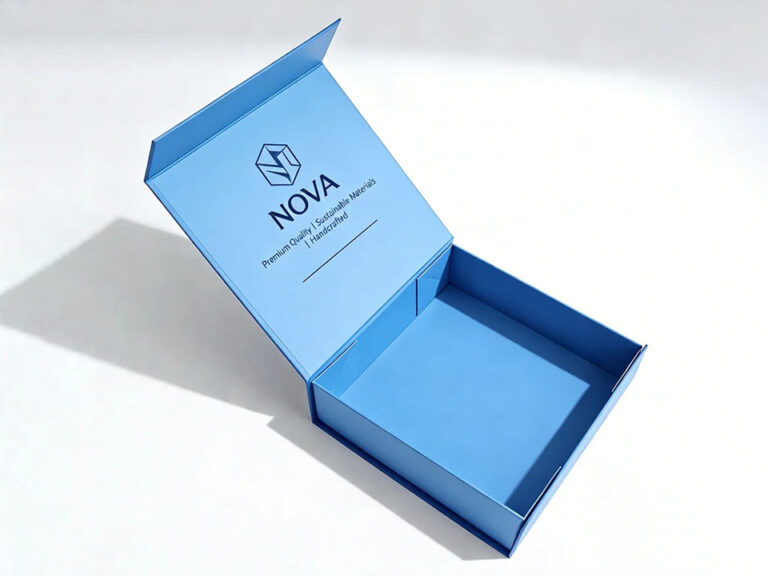
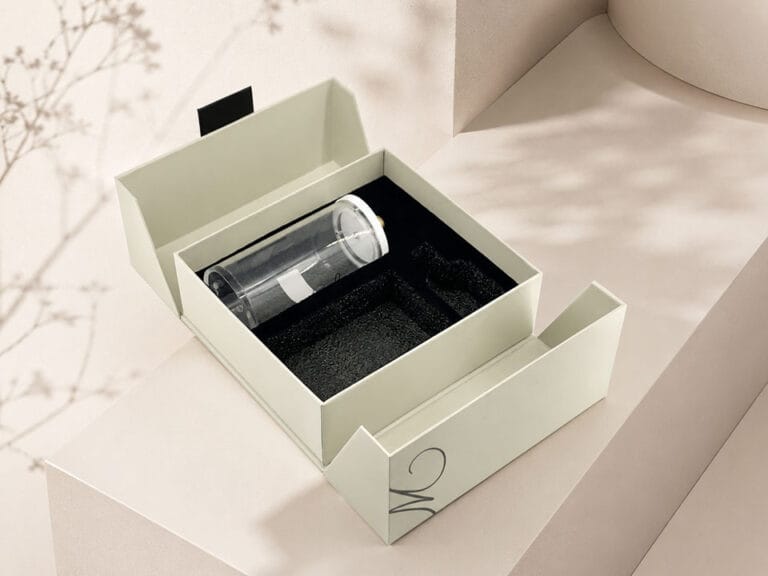
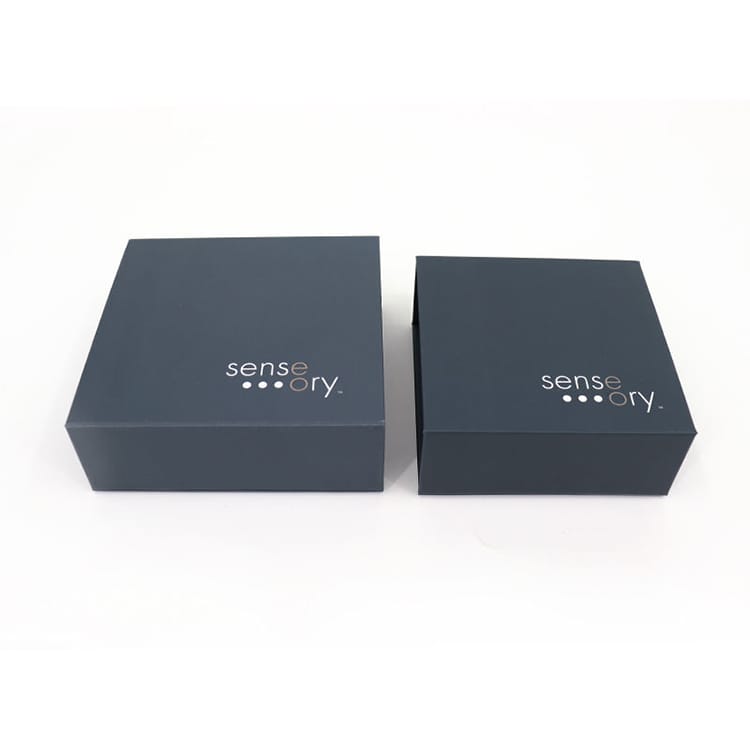
A magnetic jewelry box is a rigid presentation box with a flap or lid that closes using concealed magnets, usually built to create a clean snap, a broad branding surface, and a display-like opening for sets, kits, or higher-volume gift assortments. It often feels premium when the product needs ceremony, not just protection.
For jewelry, I would use magnetic closure jewelry boxes when the package includes layered contents: necklace cards, certificates, care booklets, polishing cloths, pouches, or multi-piece gifting. For a single tiny pendant, I would be cautious. The box may overpower the product.
A drawer jewelry box is a sleeve-and-tray rigid package where the customer pulls the inner tray outward to reveal the jewelry, creating a slower, more private opening experience that works especially well for rings, anklets, bracelets, earrings, and slim accessories. Its premium feeling comes from controlled friction and tight product framing.
The drawer format is less theatrical than magnetic packaging, but that is often the advantage. It makes the product feel discovered rather than displayed. For small luxury SKUs, that restraint can feel more expensive than a large magnetic box.
A drawer jewelry box usually feels more premium for gifting small jewelry because it creates anticipation, keeps the item visually centered, and avoids the empty-space problem that can make oversized luxury packaging feel wasteful or fake. Magnetic boxes feel more premium when the gift includes multiple components or needs a larger presentation stage.
So the best jewelry box for gifting depends on scale. A bracelet in a compact drawer box can feel intimate. A bridal necklace set in a magnetic presentation box can feel ceremonial. The mistake is treating all gifts as if they need the biggest package.
Magnetic closure jewelry boxes are often more expensive than drawer boxes because they can require hidden magnets, larger wrapped panels, hinge construction, stronger alignment control, and more complex assembly, although final cost depends on order quantity, board thickness, paper wrap, insert material, finishing, and freight volume. Bigger is not always better value.
The cost issue is not only unit price. Magnetic boxes can increase shipping volume, carton size, and warehouse space. If the magnetic structure does not raise perceived value enough to offset those costs, the brand is buying packaging theater instead of margin.
Choose between magnetic and drawer style jewelry boxes by matching the structure to product size, insert complexity, sales channel, gift purpose, and brand tone rather than choosing the format that looks most luxurious in a sample photo. Drawer suits compact jewelry; magnetic suits layered presentation and larger gifting moments.
Start with the jewelry dimensions, then design the insert, then test the opening motion. Do not start with foil color. A beautiful finish cannot rescue a box that is too big, too loose, or too awkward for the product inside.
If you are choosing between magnetic and drawer jewelry boxes, do not approve a structure from a render. Build the decision from the SKU outward.
Measure the jewelry. Define the insert. Decide whether the customer should feel privacy or ceremony. Then choose the structure.
For small rings, anklets, bracelets, and pendants, request a drawer jewelry box sample with proper sleeve resistance, rigid board, matte or linen wrap, and a tight pouch or insert. For necklace sets, VIP gifts, and branded presentation kits, request a magnetic jewelry box sample with a real insert layout and final product weight inside—not an empty showroom mockup.
And if you want packaging that actually feels premium instead of merely looking expensive, send your product size, target quantity, finish preference, and sales channel to Zhibang Packaging and ask for a structure-first recommendation before artwork begins. That one step can save you from the most common luxury packaging mistake: paying more for a box that makes the jewelry feel smaller.