Talk To Our Boss If You Didn't Find The Solution
Our boss, Alanna will ask our team to find out the solution very soon! You must be satisfied with our services!


Most brands guess.
And I don’t mean that as a cheap jab, either—I mean I’ve sat in too many packaging reviews where the client fixates on foil color, ribbon width, or some glossy Pinterest reference while nobody asks the boring questions that actually decide whether a box works: board caliper, tray drag, insert retention, freight cube, hand-pack speed, or whether the whole thing starts looking silly once the product is inside. Then comes the sampling bill. Then the regret. Predictable, really.
Why does that keep happening?
Because “premium” is a lazy word. In real production, most rigid box styles are just set-up boxes with different opening mechanics and different tolerance headaches, and those mechanics change everything: how the box photographs, how it survives parcel abuse, how the insert locks the SKU, how much empty air you’re paying to ship, and whether the end user thinks, nice, or thinks, why is this thing so oversized?
That part matters.
I frankly believe the market got harsher in the last two years. the U.S. Census Bureau’s Q4 2024 retail e-commerce release put adjusted U.S. e-commerce sales at $308.9 billion in Q4 2024, up 9.4% year over year, with e-commerce accounting for 16.4% of total retail sales; for full-year 2024, e-commerce reached $1.1926 trillion, up 8.1%, while total retail sales rose 2.8%. So the old “it only needs to look good on shelf” excuse? Dead. Your box now has to survive courier handling, ugly stacking, and the customer opening it at a kitchen counter—not under boutique lighting.
But freight is only half the headache.
Reuters’ reporting on the EU’s 2024 packaging waste deal laid out the pressure cleanly: EU packaging waste rose by more than 20% over the last decade, each resident generates roughly 190 kg of packaging waste a year, the law targets excess empty space in packs, and the policy direction is toward recyclable packaging by 2030. The European Parliament’s own summary said the same broad thing in plainer institutional language. Here’s the ugly truth: a bloated premium box is no longer just expensive—it can make you look behind the curve.
So, no, I don’t treat two piece rigid boxes, drawer rigid boxes, and magnetic closure rigid boxes as stylistic cousins. They’re different structures. Different economics. Different failure modes.
And the failures are obvious.
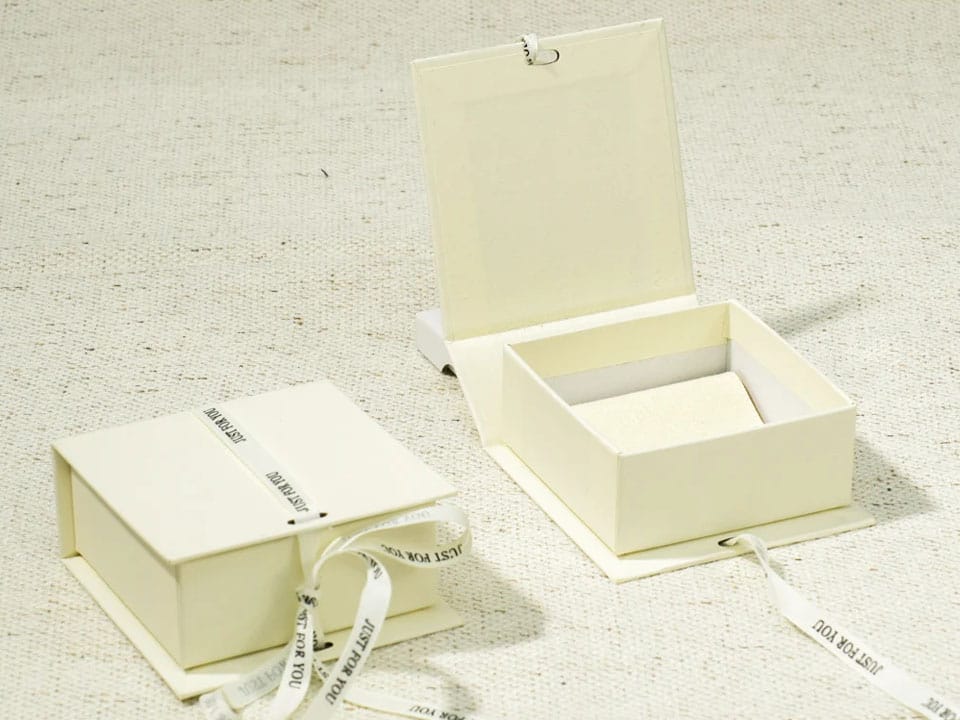
Lift. Reveal. Done.
That’s the appeal. Two piece rigid boxes—a separate lid and base, usually with telescoping walls—don’t need theatrics because the form already signals confidence, and when the proportions are right, the wrap is clean, and the insert sits flush, the thing just looks expensive without begging for applause.
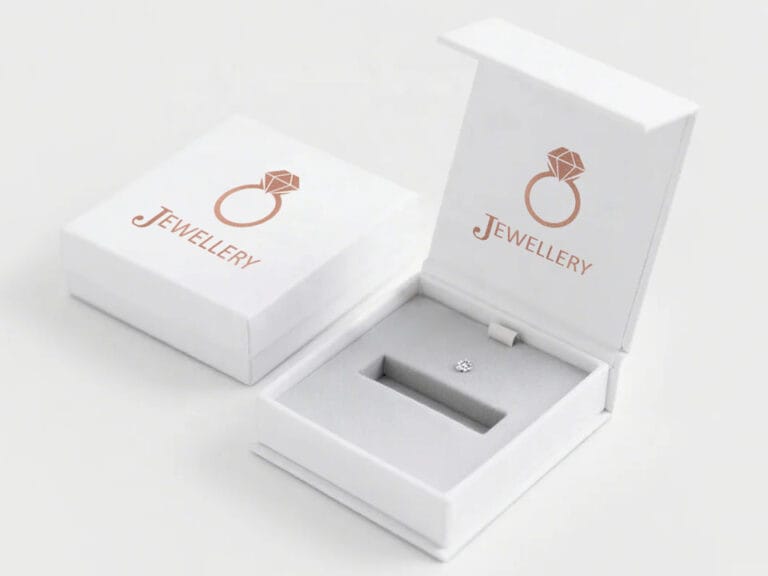
From my experience, this is still the safest structure when a buyer wants “luxury” but can’t yet explain what kind. Candles, fragrance, watches, confectionery, invitations, smaller apparel accessories—they all sit comfortably in this format. So does jewelry, honestly, especially when the brand wants a classic house feel instead of an overdesigned reveal sequence.
And there’s a reason that structure keeps winning. Tiffany’s Blue Box history ties the signature color back to 1845, notes Tiffany placed its engagement ring in the Blue Box in 1886, and says Tiffany Blue was trademarked in 1998 and standardized as Pantone 1837 Blue. That’s not a cute brand anecdote. That’s packaging becoming IP—packaging becoming memory. A well-built two-piece box can do that because it’s visually spare, instantly legible, and hard to mess up if the engineering team does its job.
I’ll say something a lot of agencies don’t like saying out loud: restraint usually ages better than novelty. A sharp shoulder fit, tight wrap turn-ins, and a lid that lifts with just enough friction—that combo outlasts trend packaging almost every time.
Usually.
Pull. Pause. Reveal.
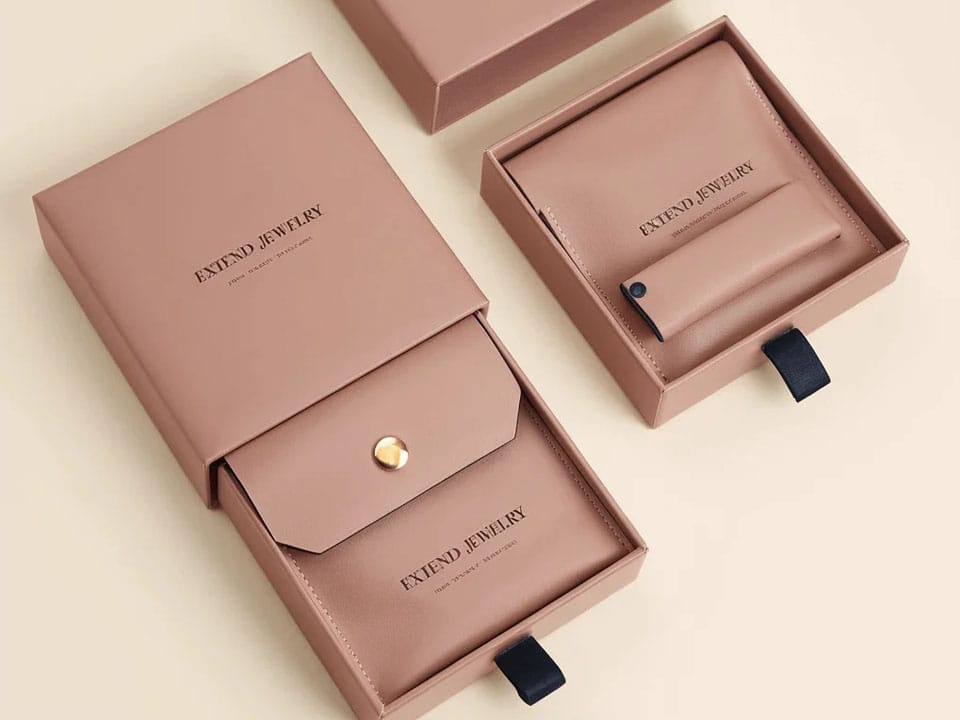
That little sequence changes the mood. Drawer rigid boxes—slide boxes, sleeve-and-tray builds, sometimes called matchbox styles by people who’ve been around dielines too long—create a slower reveal and a more tactile hand-feel, which is why they keep showing up in jewelry, slim accessories, gift cards, pens, and small luxury programs where anticipation does some of the selling.
I’ve seen this structure outperform flashier formats with anklets, bracelets, chains, and slimmer necklace sets because the tray motion gives you perceived value without forcing the outer box to get bigger, and that matters when the item inside is physically small but commercially sensitive. You can see the direction in these kraft drawer rigid boxes with silk ribbon and in this slide-out jewelry gift box for anklet packaging. The format feels deliberate. Not loud. Better.
And the category data backs the instinct. McKinsey’s State of Fashion 2024 argued that hard luxury—especially jewelry and watches—was likely to keep attracting spend in tougher conditions, while Reuters’ 2023 reporting on Signet pointed to a split inside jewelry itself: pieces under $5,000 softened, but items above $5,000 stayed comparatively strong. That’s exactly the kind of market where packaging needs to signal confidence without adding dumb cost.
So what’s the best rigid box for jewelry? I’d still say this: for many jewelry SKUs, especially elongated or delicate ones, drawer rigid boxes are the smartest answer. Not because they’re trendy. Because they choreograph the reveal and hold the product in a narrow footprint.
But—and this is where inexperienced buyers get burned—the drawer box has tighter tolerance drama than people expect. If the sleeve fit is off, the tray rattles. If the pull ribbon feels cheap, the whole pack goes mass-market. If the insert cavity is loose by a few millimeters, the piece can skate inside and kill the moment before the customer even touches the product. Small misses. Big damage.
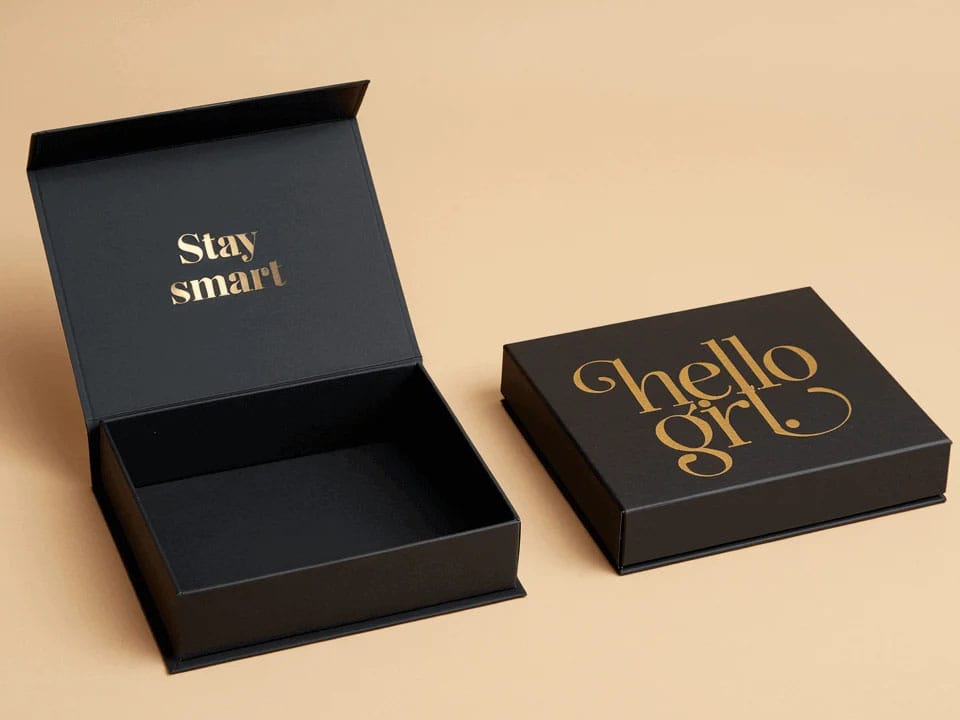
Magnets impress people.
Especially in meetings. A flap swings shut, the hidden magnet catches, everybody nods, and suddenly someone decides that a tiny SKU needs a book-style carton with twice the footprint and a much uglier freight profile. I’ve seen it too many times.
Still, magnetic closure rigid boxes absolutely have a place. For presentation kits, onboarding packs, skincare sets, PR mailers, apparel folds, and broader-format gifting, they work because the structure gives you a big presentation plane, a hinged opening, and room for layered components. When the assortment justifies that real estate, the box feels intentional—not inflated.
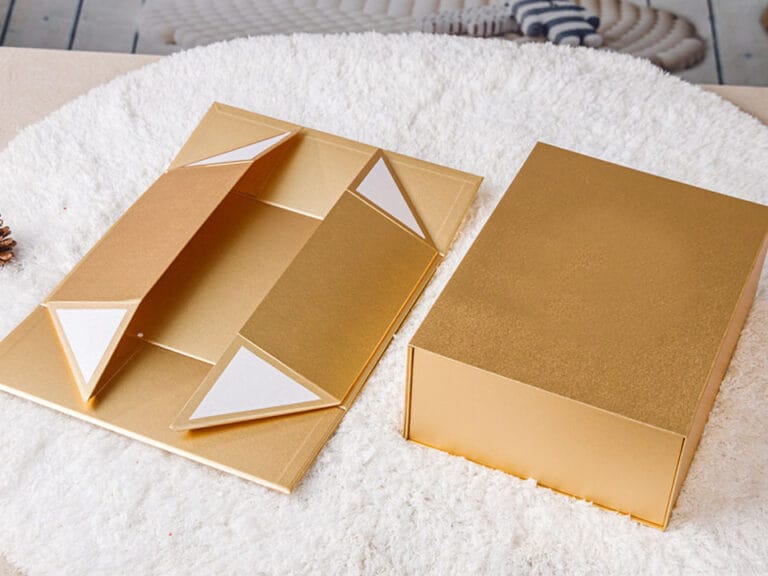
That’s why the structure makes sense in a magnetic paper packaging box with gold foil when the brand wants a cleaner front panel and stronger close, and it makes even more sense in this A4 gift presentation box with ribbon and frame when the job is documents, booklets, or multi-part presentation material. That’s classic magnetic lid gift box territory.
But here’s my bias: brands overprescribe this format. Badly. A small product dropped into a magnetic rigid box often creates dead air, higher board consumption, more wrap paper, more shipping volume, and an awkward mismatch between the product’s actual value and the packaging’s performative scale. In a market where parcel commerce keeps climbing and packaging waste rules are getting less forgiving, that’s not sophistication. It’s overpacking with better magnets.
It looks expensive. Sometimes that’s the problem.
The insert decides it.
I don’t care how good the outer wrap looks—if the insert is lazy, the whole box is lying. Rigid box inserts are the internal engineering layer that stops a premium pack from turning into expensive clutter, and in practice the insert does more to protect perceived value than the lid style ever will.
For jewelry, I usually think in three buckets. Paperboard fitments when the brand wants cleaner recyclability language and tighter cost control. EVA or flocked foam when the presentation needs a softer seat and more hold. Satin lifts, collars, or layered nests when extraction needs to feel staged instead of abrupt. None of this is decorative fluff. It’s pack architecture.
And big luxury brands have been telling us that for years. Cartier’s paper and packaging standards say the red box uses solvent- and plastic-free coatings, FSC-certified paper, and 50% post-consumer recycled fibers in the covering paper. Pair that with the long-run packaging discipline behind Tiffany’s Blue Box history, and you get the larger point: serious brands treat packaging as a system—materials, finish, insert, color memory—not as a last-minute shell around the SKU.
That’s the part buyers skip. Then they wonder why the sample felt “off.”
| Style | Structure | Best use case | Insert demand | Freight efficiency | My verdict |
|---|---|---|---|---|---|
| Two-piece rigid box | Separate lid + base | Jewelry, candles, fragrances, confectionery, classic gifting | Medium to high | Usually the most balanced | Best default when you want timeless premium without extra mechanism |
| Drawer rigid box | Sleeve + pull-out tray | Jewelry, slim accessories, small luxury gifts | High | Good, but depends on sleeve/tray ratio | Best for controlled reveal and small high-value SKUs |
| Magnetic closure rigid box | Hinged flap with hidden magnets | A4 kits, apparel, PR boxes, multi-item sets | Medium to very high | Usually the least efficient for small products | Best when presentation area and layered contents justify the size |
I use four filters. Not seven. Not some consultant’s bloated scoring matrix.
First, product geometry. Small, dense, high-value items usually want a tight footprint—either a two-piece box or a drawer format. Flat collateral, folded textiles, and multi-component kits are where magnetic closure rigid boxes start earning their keep.
Second, selling context. Counter display and parcel transit are different sports. If your box is going DTC, I care less about the showroom moment and more about crush behavior, fit security, and whether the box arrives still looking like it deserves the price tag.
Third, emotional script. That sounds fluffy, but it isn’t. A lift-off lid says confidence. A drawer says anticipation. A magnetic flap says presentation. Same product, different psychological cue.
Fourth, margin discipline. This is where things get ugly. If the packaging cost starts eating into unit economics to the point where finance is flinching and ops is quietly annoyed, the box probably isn’t “elevating the brand.” It’s just expensive.
So, how to choose a rigid box style? Work backward from product dimensions, insert spec, shipping route, and opening experience. Don’t start from the 3D render. Don’t start from a supplier sample that only looked good because it was empty. And definitely don’t copy a competitor’s format without understanding their freight model or price architecture.
That’s how brands overspend.
Rigid box styles are structural formats used in set-up boxes made from dense paperboard, where the key difference is how the box opens, how the product is supported inside, and how the package balances protection, visual impact, shipping efficiency, and perceived value across retail, gifting, and e-commerce use cases. In plain English, you’re usually choosing between a lift-off lid, a sliding tray, or a hinged magnetic flap.
Two-piece rigid boxes are lift-off-lid set-up boxes optimized for direct, compact premium presentation, while magnetic closure rigid boxes are hinged flap structures designed for broader presentation surfaces, layered contents, and a more theatrical opening, so the better option depends on product size, insert complexity, shipping channel, and budget tolerance. My honest view? Small products are usually sharper—and cheaper to move—in two-piece boxes.
The best rigid box for jewelry is usually a compact drawer rigid box or a tightly proportioned two-piece set-up box with a precise insert, because jewelry packaging has to control movement, protect finishes, and signal value without adding the oversized dead space that makes luxury packs feel fake or overengineered. If I’m packing an anklet, chain, or slim bracelet, I lean drawer; if I’m packing rings or classic sets, I often lean two-piece.
Magnetic lid gift boxes are rigid presentation boxes with concealed magnets in the closing flap, and they look more luxurious only when the product assortment, panel size, and insert architecture justify the larger format; otherwise, they can read like expensive theater wrapped around a product that didn’t need the extra board or freight volume. That’s why they shine in kits and presentation sets, but can feel bloated for a single small item.
Choosing a rigid box style means matching the opening mechanism, insert design, product geometry, sales channel, and freight reality to the actual SKU rather than picking the format that looks best in a render, mood board, or overbuilt sample, because the wrong structure usually fails on cost, fit, or shipping before it fails on appearance. Start with the product and insert. Then sanity-check the rest.
Stop guessing.
If you’re sourcing packaging for jewelry, gifts, beauty, or presentation kits, the right move is boring at first and profitable later: lock the SKU dimensions, target price, insert type, shipping method, and reveal style before you talk artwork. Do that, and the right rigid box style usually picks itself. Skip that step, and you’ll keep paying for samples that look premium in a sales deck and average everywhere else.