Talk To Our Boss If You Didn't Find The Solution
Our boss, Alanna will ask our team to find out the solution very soon! You must be satisfied with our services!


I’ve watched brands obsess over foil, soft-touch stock, rigid walls, jar weight, even the little “thunk” a lid makes when it closes, and then completely face-plant on the one thing regulators, distributors, and retailers actually read first—the label panel that decides whether the unit moves, stalls, gets reworked, or ends up quarantined in the back room. It happens. Constantly.
Three words. Expensive mistake.
But let’s stop pretending concentrate packaging is mostly a branding exercise. It isn’t. In this category, the label is the operating system. It tells the buyer what the extract is, how much is inside, what the potency reads, what warnings attach to it, and whether the pack can survive a compliance check without somebody in QA doing emergency patchwork with revised stickers at 11:40 p.m. I frankly believe that’s the split between real operators and tourists.
And California, to its credit, doesn’t leave much room for cute interpretation. The DCC’s 2024 labeling checklist says most required information has to sit on the outer layer of packaging or be visible through it, and if the immediate container can be separated from the box—say, a jar inside a carton—that immediate container still needs the universal symbol. QR-code dodge? Doesn’t fly. Off-pack website copy? Also no. That’s why I look at custom cannabis concentrate glass jar packaging boxes as a two-piece compliance system, not a “premium pack” and a random jar. The jar has to stand on its own when the carton disappears.

Here’s the ugly truth: a mislabeled concentrate isn’t “basically compliant.” It’s a recall candidate with nicer artwork.
Need proof? Fine. In August 2024, Health Canada recalled one lot of Canna Farms Tangerine Dream after the printed total THC read 175 mg/g while the actual value was 246 mg/g. Then in July 2024, Frank CBD Oil 100 got recalled because the secondary carton carried the wrong brand name and lower cannabinoid values than the bottle actually contained. That’s not a design hiccup. That’s a breakdown in artwork control, spec discipline, and release QA.
And, honestly, I’ve never bought the industry habit of treating concentrate packaging labels like a late-stage sticker problem. That thinking is backwards. The primary panel, the information panel, the warning block, the font minimum, the universal symbol size, the batch logic, the pack date—those aren’t “details.” They drive the dieline, the printable area, the varnish breaks, and even whether a lift-off lid gift box for concentrate jar packaging is structurally realistic for the SKU. If your art file is gorgeous but can’t hold the required copy in legible type, the structure was wrong from day one.
Child resistance matters, and yes, I know people in the trade still roll their eyes when CRP comes up because it adds friction, unit cost, and sourcing headaches. Still true. Still mandatory. California says cannabis goods sold at retail have to be child-resistant, tamper-evident, and—if the package has multiple servings—resealable. The DCC’s guidance also spells out that dab, shatter, wax, and vape cartridges can use single-use CRP, but then the pack must say, “This package is not child-resistant after opening.” That one sentence changes the whole packaging brief. Suddenly the closure style, the copy deck, and the consumer-use sequence all have to agree. That’s why formats like a resealable hexagon rigid box for cannabis wax jars or an eco cardboard slide drawer box for cannabis concentrate have to be evaluated as presentation layers unless they’re part of the actual child-resistant access system. Pretty shell, wrong compliance point.
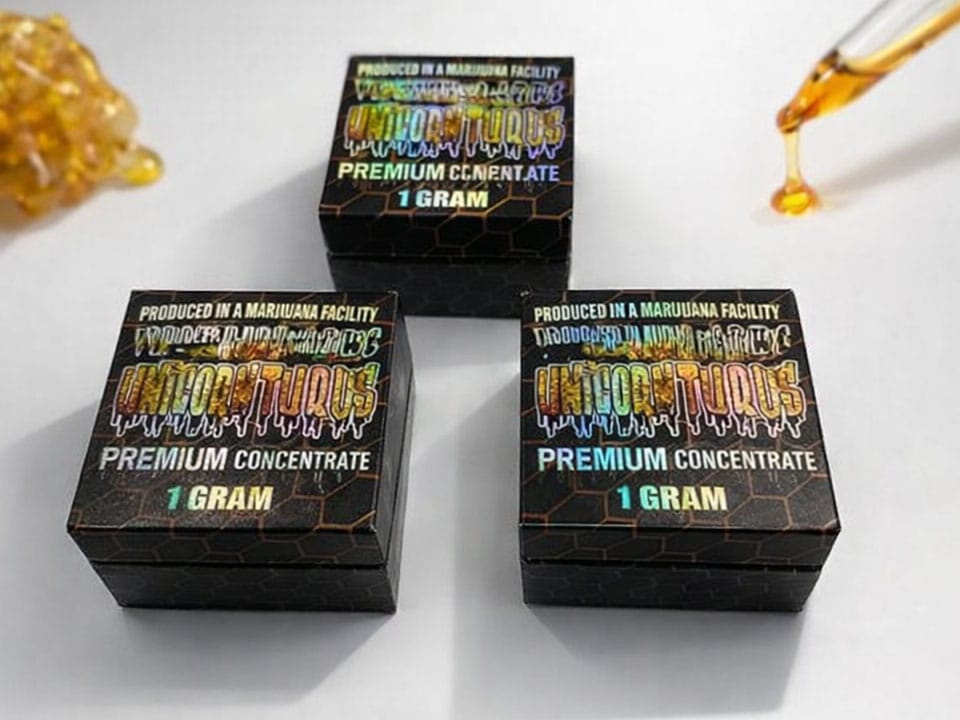
Tamper evidence gets dismissed even more casually, which I think is nuts. The regulations define tamper-evident packaging as packaging sealed so the contents can’t be accessed without obvious destruction of the seal on first opening. In plain English: if someone can get in cleanly and put it back together like nothing happened, your pack is weak. Period. In concentrate packaging, that usually means you’re not really debating aesthetics anymore—you’re debating induction seals, shrink bands, liner selection, neck finish tolerances, and whether the primary container can prove first-open integrity when the retailer, the buyer, or the inspector looks at it cold.
And don’t say enforcement is hypothetical. California’s DCC said that in 2024 it issued 481 embargoes, plus 63 recalls affecting 259 products, removing almost 25,000 units from legal retail shelves. Those are not theoretical numbers from a webinar deck. That’s the compliance weather you’re shipping into. So when somebody asks me whether compliant concentrate packaging is “worth the cost,” my answer is pretty blunt: compared with rework, stuck inventory, hold notices, and retailer distrust? Yes. Easily.
There’s another layer people in packaging sales don’t always want to mention because it doesn’t sound sexy: harm reduction. A 2024 California poison-control study linked 7,668 harmful cannabis exposures to their originating locality, found that 80% involved ingestion, and noted that only 13% of localities had added packaging and labeling rules beyond state law. The authors also found some indication that localities adopting those rules saw fewer harmful exposures in some older-age subgroups. That’s not a clean Hollywood ending. It is, however, enough to kill the lazy claim that labels are just compliance theater. The AJPH commentary on edible packaging and child poisonings pushes the same point from the public-health side: packaging copy and structure shape real outcomes. ([PMC][6])
So when people ask why is concentrate packaging labeling important, I don’t give them the sanitized version. I tell them the label is what stands between a sellable SKU and a dead one. It handles dose communication, ingredient disclosure, traceability, warning language, and retailer acceptance in one cramped little space that most teams under-budget and overcomplicate. That’s the hard part. And yes—it’s usually where the margin leak starts.
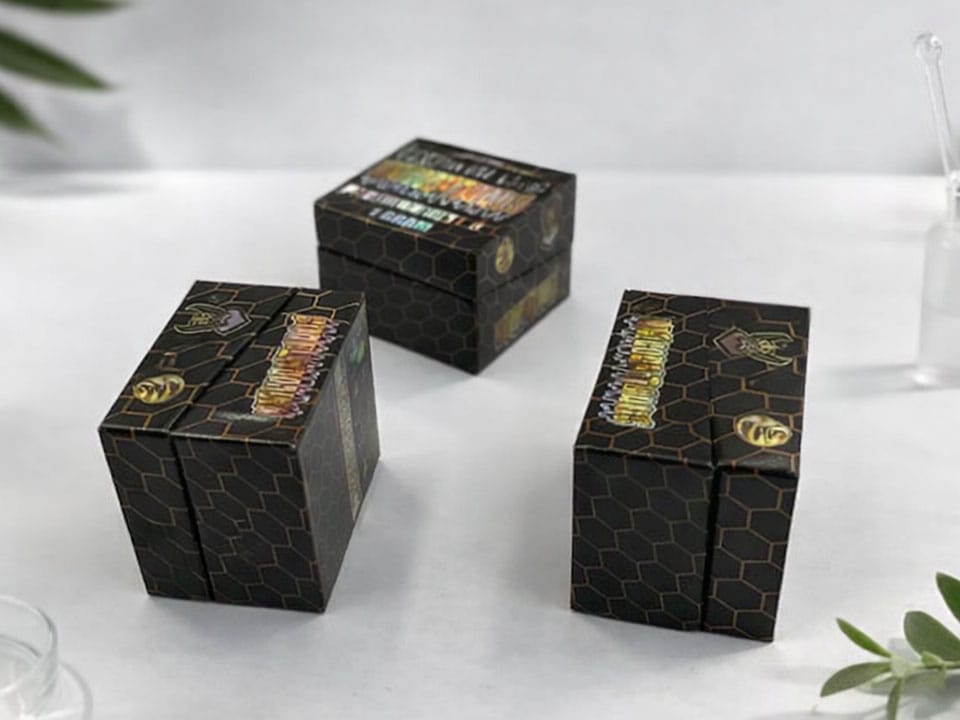
Here’s the framework I’d use before approving any new run of cannabis concentrate packaging.
| Reason for labeled concentrate packaging | What the label/package must do | What happens when teams get it wrong |
|---|---|---|
| Potency control | Match printed cannabinoid data to the tested product and the correct SKU | Overstated or understated THC/CBD claims, recalls, dosage distrust |
| Product identification | State product identity, net weight/volume, and required symbol clearly on the right panel | Retail rejection, relabeling costs, customer confusion |
| Chain of custody | Tie the unit to the manufacturer, packaging date, warnings, and traceable batch logic | Weak recall execution, harder audits, inventory disputes |
| Child safety | Use child-resistant concentrate packaging at the real point of access, not just in outer presentation | Access by minors, noncompliance, ugly enforcement outcomes |
| Tamper visibility | Show obvious first-opening disruption through tamper-evident concentrate packaging | Consumer doubt, contamination suspicion, retailer complaints |
| Small-format usability | Preserve legibility on tiny jars, carts, and cartons without hiding required text off-pack | Noncompliant artwork, unreadable warnings, design rework |
And that table looks boring right up until a buyer rejects a shipment because the front-of-pack is wrong, the universal symbol is missing on the immediate container, or the info panel copy doesn’t match the tested batch. Then it gets very interesting, very fast.
How to label concentrate packaging without getting cute about it? I’d build from the immediate container outward, not the other way around. Front panel first: product identity, net contents, symbol. Info panel next: manufacturer details, pack date, warnings, batch logic, use instructions where needed, and cannabinoid data that actually matches the released lot. Then I’d stress-test the small-format legibility before final print approval—because this is where brands always try to cheat with microscopic text, fold-out chaos, or off-pack disclosures that regulators already told them not to use. From my experience, that’s the exact point where “premium” turns into “please hold shipment.”
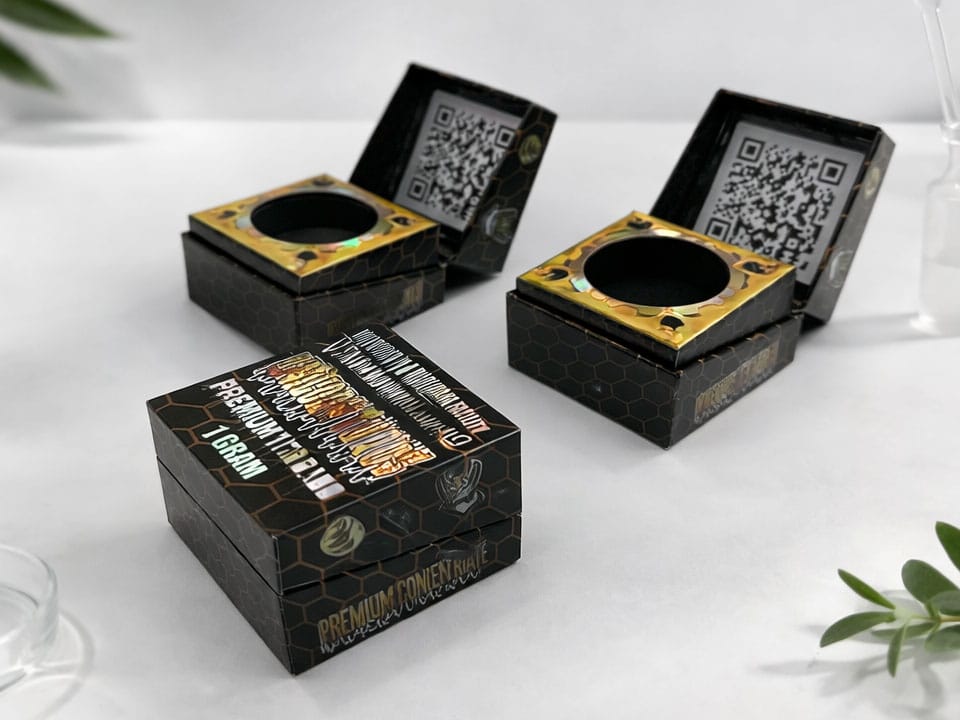
Concentrate packaging labeling is the required information system on a cannabis extract package that identifies the product, states net contents and cannabinoid data, communicates warnings and use details, and ties the unit to a traceable manufacturer and batch so it can be lawfully sold and, if needed, quickly recalled. I’d go further than that: it’s the part that decides whether the SKU is credible or sketchy.
Concentrate labeling requirements are the rules that determine what information must appear on the package or immediate container of a cannabis concentrate, including product identity, net contents, warning language, symbol use, manufacturer information, packaging date, and any mandatory cannabinoid or ingredient disclosures required by the governing jurisdiction. In California, the split between primary panel and informational panel isn’t optional—it shapes the whole artwork file.
Child-resistant concentrate packaging is packaging designed so children under five cannot open it easily, while adults can still access the product, and for some concentrate types it may be single-use child-resistant only until first opening if the label clearly states that protection ends after opening. That last clause matters more than most teams realize because it changes both the closure choice and the copy stack.
Tamper-evident concentrate packaging is sealed packaging that shows obvious destruction when first opened, making it clear that the product could not be accessed without breaking the original seal and giving retailers, regulators, and consumers visible proof of first-open integrity. In practice, that means your seal design can’t be decorative theater—it has to actually fail visibly when breached.
To label concentrate packaging correctly, start with the immediate container, place mandatory identity and symbol elements where regulations require them, keep required disclosures attached to the package, and make sure every printed potency and warning statement matches the tested product and the intended retail format. My advice is simple: do compliance architecture before finishing, not after, because late fixes are where packaging budgets go to die.
Most cannabis packs don’t fail because the board stock was wrong. They fail because the team treated labeling like an afterthought and hoped prepress, ops, or compliance would patch it on the back end. Don’t do that. Build the label logic, the CRP strategy, the tamper-evident layer, and the immediate-container legality first—then make it beautiful. That’s how concentrate packaging stops being a cost sink and starts acting like a real commercial asset.