Talk To Our Boss If You Didn't Find The Solution
Our boss, Alanna will ask our team to find out the solution very soon! You must be satisfied with our services!


Door-to-warehouse sounds simple. You pick up at the factory door, then you drop at a warehouse dock. Done.
In real life, it’s a chain of handoffs: pickup → linehaul → customs (maybe) → drayage/LTL/intermodal → delivery appointment → receiving check-in. Every handoff is a place where shipments go “invisible,” ETAs drift, and your 3PL starts sending those friendly compliance emails.
New logistics partnerships are fixing that. Not with magic. With something way more boring—and more useful: tighter integration, fewer gaps in responsibility, and more standardized service layers (booking, tracking, duty options, and exception handling). If you run e-commerce, retail replenishment, or any kind of launch calendar, door-to-warehouse is turning into a real product you can scale.
Below are the strongest arguments says in plain English, plus evidence tables and a packaging angle that brands usually miss.
Door-to-warehouse works when one operator “owns the thread” from pickup to dock check-in. Partnerships help because they stitch together the parts no single provider covers well:
When you combine those pieces, you stop running shipments like one-off projects. You start running a repeatable lane playbook.
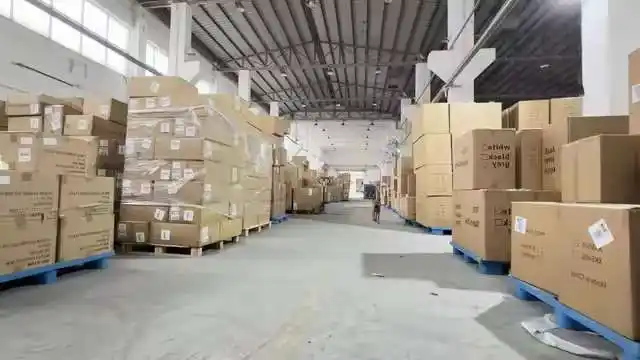
A common partnership model now is freight partners + receiving hubs + fulfillment centers. ShipBob’s FreightBob expansion with Maersk and ECU Worldwide is a clean example: the messaging focuses on getting inbound inventory into ShipBob receiving hubs and fulfillment centers across regions, not just “shipping internationally.”
Why this matters in ops terms:
Here’s the part people don’t say out loud: door-to-warehouse is often a software problem. If you can’t create clean shipment data (PO → carton labels → ASN), your warehouse team bleeds time.
That’s why modern partnerships lean hard on integration: shared visibility, fewer manual emails, fewer “who owns this delay?” loops.
Multi-channel fulfillment isn’t only about shipping faster. It’s about managing inventory like one pool and routing orders intelligently across channels.
Amazon’s Multi-Channel Fulfillment expansion (supporting merchants selling on platforms like SHEIN, Shopify, and Walmart) leaned on outcomes merchants reported: average out-of-stock reduction (19%), average inventory turnover improvement (12%), and a reported sales/revenue lift (~19%) after adding MCF to off-Amazon channels.
You don’t need to use Amazon to learn from the playbook:
That’s the “warehouse side” of customer experience. If inventory doesn’t land on time, your ads don’t matter.
If you ship cross-border, the weak link is often duty/tax handling. DHL’s Shopify integration highlighted offering both DDU (duties unpaid) and DDP (duties paid). That choice changes the flow:
This is not just a customer-delivery thing. It can hit warehouse inbound too. If customs or duty payment drags, your warehouse appointment gets missed, and you’re rebooking slots like it’s a hobby.
Partnerships keep pushing tracking deeper into the chain. Hellmann + SkyNet’s cross-border e-commerce offer emphasized reliable customs clearance know-how in 190+ countries and real-time tracking, positioned as “faster than postal, more cost-efficient than express.”
Freightos + Forward Air is another useful angle: digital booking plus a huge ground footprint. The published network numbers were specific: nearly 11,000 lane pairs, 100+ facilities, and 96% of U.S. ZIP codes coverage. That’s not a fluffy claim. It’s the kind of detail logistics buyers trust.
When tracking improves, you get fewer nasty surprises:
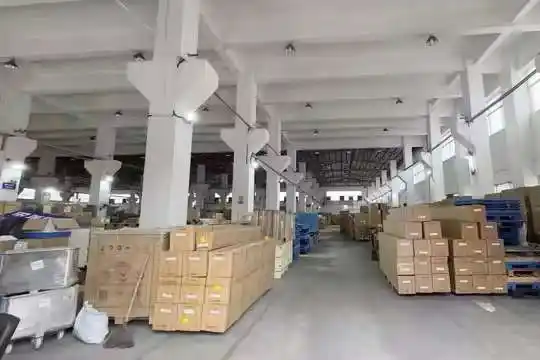
Intermodal partnerships are also part of the door-to-warehouse story, especially for long-haul and constrained markets.
If you’re shipping bulky packaging (gift sets, subscription kits, electronics bundles), intermodal stability can keep inbound calendars from falling apart.
Door-to-warehouse is inbound. But the same partnership logic shows up outbound too: delivery + returns working as one system.
Flexport + Veho’s partnership announcement included brand outcome numbers: 19.2% repurchase rate increase and 40% customer lifetime value increase for brands offering fast, reliable delivery and returns.
Even if you don’t ship with them, the point is bigger:
Partnerships are great until a shipment goes sideways. Then you get the blame triangle: carrier says it’s the warehouse, warehouse says it’s the forwarder, forwarder says it’s customs.
So yes, you need SLAs. Keep it simple:
This part isn’t sexy, but it’s the difference between scaling and constantly firefighting.
| Partnership / Program | Door-to-warehouse angle | Published proof point (no cost figures) | Source (publisher / release) |
|---|---|---|---|
| ShipBob FreightBob + Maersk + ECU Worldwide | Inbound freight into receiving hubs + fulfillment centers | Maersk: 65,000 port pairs in 100+ countries; ECU: 180 countries, 2,400+ trade lanes, door-to-door in 50+ markets | PR Newswire release (ShipBob) |
| Amazon Multi-Channel Fulfillment | Shared inventory pool across channels | Avg 19% fewer stockouts, avg 12% better inventory turnover, reported ~19% sales lift | Business Wire release (Amazon MCF) |
| DHL + Shopify integration | Cross-border shipping with duty options | DDU + DDP offered; DHL services integrated into Shopify | DHL press release |
| Hellmann + SkyNet | Cross-border e-commerce door-to-door | Customs + last-mile + tracking in 190+ countries | Hellmann announcement / product page |
| Freightos + Forward Air | Digital booking for trucking legs | ~11,000 lane pairs, 100+ facilities, 96% of U.S. ZIP codes | Freightos press release / PR Newswire version |
| CSX + BNSF intermodal | Coast-to-coast lane alternatives | New intermodal services; two 10,000-foot sidings mentioned | CSX announcement + BNSF notification |
| TOTE + STG Logistics | Faster intermodal to Puerto Rico | 15,000 pieces of equipment; three-day transit time positioned | STG news notice / PR Newswire version |
| Flexport + Veho | Delivery + returns outcomes | 19.2% repurchase lift; 40% CLV lift | Flexport blog post |
(Yeah, it’s a lot of numbers. But buyers love numbers. Use them sparingly and you’ll sound human, not robotic.)
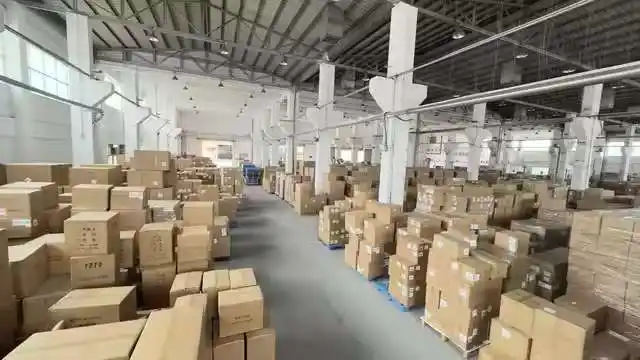
Now let’s talk about the part that quietly breaks door-to-warehouse projects: packaging that can’t survive the lane, can’t scan, or doesn’t match receiving rules.
Warehouses care about:
This is where Zhibang Packaging fits naturally. Zhibang is a factory-direct custom paper packaging manufacturer with a broad catalog and global delivery positioning. Start from the main site if you wanna see the range: Zhibang Packaging. Then browse the full catalog on Products.
Use the format that matches your lane reality:
And when you’re ready to spec it like an adult (not just “make it nice”), use Need A Quote. It’s a clean way to align dielines, materials, finishes, inserts, and label zones before you ship a single pallet.
| Warehouse pain point | Packaging adjustment | Ops slang (what your team will call it) |
|---|---|---|
| Cartons crush in transit | stronger corrugate spec, tighter fit, inserts | “damage rate is creeping” |
| Receiving scan is slow | dedicate a flat label panel, avoid seams + curves | “inbound backlog” |
| Mis-picks from mixed SKUs | clear carton marking, consistent inner packs | “pick error” |
| Too many box sizes | standard footprints, modular inserts | “cartonization” |
| Returns arrive destroyed | tougher outer mailer, clean open/close design | “reverse is ugly” |
This is also where you sprinkle black-belt packaging details (but don’t overdo it): registration tolerance, glue flap width, anti-scuff lamination, drop-test mindset, and stacking strength. It makes buyers feel safe.
Most partnership announcements follow a predictable flow:
Also… don’t be too perfect. A tiny bit messy reads more human. Like: “this part gets annoying fast.” That’s fine.