Talk To Our Boss If You Didn't Find The Solution
Our boss, Alanna will ask our team to find out the solution very soon! You must be satisfied with our services!


Packaging is leverage.
If you’re still treating packaging strategy as “pick a nice box,” you’re volunteering to be taxed (literally), sued (sometimes), or quietly bled by freight, damage rates, and rework—especially now that regulators are explicitly targeting wasted space, material chemistry, and what you claim on-pack.
Sound dramatic?
Here’s the hard truth I keep seeing: small businesses buy packaging like a desperate consumer, enterprises buy packaging like a risk manager with a calculator and a compliance team. Same cardboard. Totally different game.

Three words: cash is king.
A small business doesn’t have the budget for a “perfect” packaging design strategy, because perfect is expensive in the wrong places—tooling, multiple vendors, exotic finishes, custom inserts for every SKU, and freight-heavy structures that punish you every time you ship. But you still need something that protects the product, looks credible on camera, and doesn’t turn returns into your #1 growth channel.
So I’d rather see you build a product packaging strategy around constraints you can actually control:
If you’re shipping, go read the brutally practical printed corrugated box design tips for shipping boxes and notice the subtext: structure and print limits dictate what “branding” can even mean on corrugate.
And yes, you should steal from enterprise—just selectively. The small brand version of “brand packaging guidelines” is a one-pager: logo clear space, 1–2 typefaces, barcode placement, and a single color standard (Pantone if you can afford it, CMYK target if you can’t).
Enterprises don’t “design a box.” They design a system.
That system includes brand packaging guidelines, procurement guardrails, quality thresholds (AQL sampling), and fallback suppliers. It also includes chemistry and claims—because regulators are coming for both.
In March 2024, Reuters reported the EU’s packaging deal included targets to cut packaging waste, rules to reduce oversized shipping boxes (including limits on “empty space”), and a ban on PFAS (“forever chemicals”) in food-contact packaging, with small businesses explicitly carved out as exemptions in parts of the framework. That’s not branding. That’s policy shaping packaging decisions.
This is why enterprise packaging strategy gets so “bureaucratic.” It has to. One bad claim (“recyclable” when it’s not in practice) or one restricted material (PFAS in a grease barrier) can turn into relabeling, product holds, or worse.
If you want a concrete enterprise-style artifact that small brands can copy, start with a spec sheet that names actual materials and tolerances:
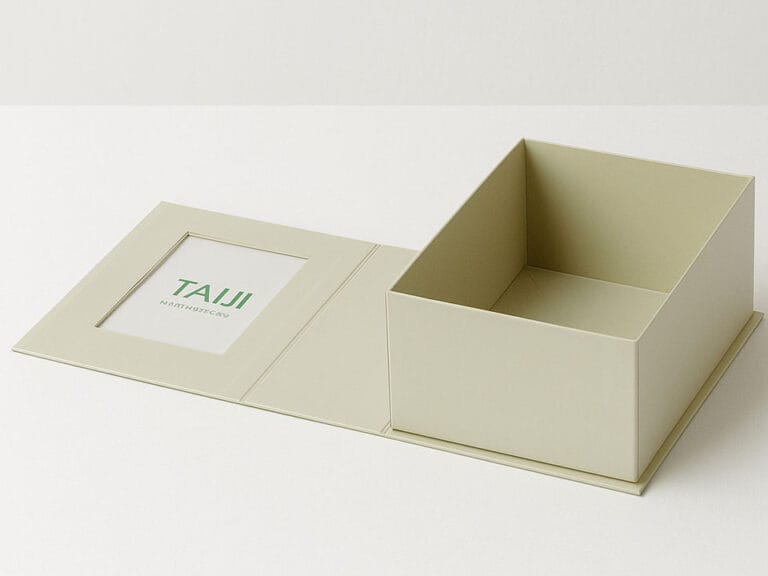
If you’re building premium rigid, the details matter: chipboard GSM, wrap stock, lamination type, and finish stack (matte lamination + spot UV + foil) are basically your “bill of materials.” Here’s a decent reference point on construction choices in rigid box structure and chipboard specs.

| Decision area | Small business packaging | Enterprise packaging strategy |
|---|---|---|
| Primary goal | Don’t run out of cash; don’t drown in returns | Repeatability across markets; minimize legal/compliance risk |
| Design posture | Iterate fast; “good enough” beats “beautiful” | Freeze specs; change control is formal (versioning, approvals) |
| Supplier approach | One reliable partner, MOQ flexibility | Multi-sourcing, audits, scorecards, redundancy by region |
| Packaging design strategy | Simple dielines; avoid fragile finishing stacks | Detailed dielines; color control; finish stack validated at scale |
| Quality control | Spot checks; basic transit testing | AQL plans; lab tests; channel-specific performance targets |
| Sustainability | Avoid obvious waste; pick recyclable materials when possible | Formal LCA inputs; recycled content targets; claim substantiation |
| Regulatory exposure | Lower… until you sell cross-border or scale fast | Constant; EPR fees, restricted substances, labeling rules |
| Time horizon | Weeks to months | Quarters to years |
Two sentences. Big impact.
If you sell into the UK and you’re using plastic packaging with under 30% recycled content, the government’s Plastic Packaging Tax rate for 1 April 2024 was £217.85 per tonne (it’s indexed and changes over time, so enterprises track it like a commodity).
And on the EU side, the political direction is clear: less packaging, less empty space, fewer toxic chemistries, and more enforced recyclability requirements—plus carve-outs that often protect small businesses early, then tighten the screws once systems exist.
So the enterprise approach is predictable: pay for compliance up front, because paying later costs more.
Short sentence.
Start ugly, then get smart: lock the structure that survives shipping, write minimal brand rules, and only then spend money on cosmetics, because the most expensive packaging mistake is reordering 5,000 boxes you can’t use.
Want the checklist?
If you want a broader blueprint written for newer sellers, Zhibang’s e-commerce packaging beginner’s guide for small brands is a decent jumping-off point.
I’m skeptical of factories that only talk about “premium.” Premium doesn’t pay for itself if your specs don’t scale.
What I do like: manufacturers that can support both ends—small runs with sane sampling, and enterprise programs with certifications and repeatability. Zhibang explicitly positions itself as an audited supplier (FSC®, ISO 9001/14001, and other certifications) on its FSC and ISO-certified packaging manufacturer page.
And if you want to see how “strategy” becomes actual structures and finishes, skim the customer cases from premium brands to reverse-engineer what those brands prioritized (it’s rarely what marketing claims they prioritized).

A packaging strategy is the documented set of decisions that governs how your product is protected, presented, labeled, and shipped—materials, structure, print specs, compliance claims, and supplier controls—so unit economics, brand consistency, and regulatory exposure stay predictable as volumes and channels change.
In practice, it’s your “packaging operating system”: what you standardize, what you test, and what you refuse to claim unless you can prove it.
A small-business packaging strategy is a lean plan that prioritizes cash flow, low-risk materials, and repeatable box styles, while leaving room to iterate fast—so you can validate demand before paying for expensive tooling, complex finishes, or multi-supplier global rollout.
Start with one structure that works for your main channel, prototype it, then add brand rules and upgrades only after reorder volume earns the complexity.
Enterprise brand packaging guidelines are the enforced technical standards for every pack component—Pantone or CMYK tolerances, dielines, substrates, coatings, barcode placement, legal copy, sustainability claims, and QC tests—so multiple factories can produce identical packaging without customer complaints or retailer chargebacks.
They exist because enterprises pay for inconsistency twice: once in rework, and again in reputational damage.
Scalable packaging solutions are packaging systems designed to survive growth: standardized structures, modular inserts, verified suppliers, and test-backed specs that work across 500 units and 5,000,000 units, across DTC, Amazon FBA, and retail distribution, without blowing up freight, damage rates, or compliance.
The giveaway is repeatability: same results across factories, seasons, and shipping lanes.
Packaging compliance risk is the financial and legal exposure created when materials, labels, or environmental claims don’t match evolving rules—like EU restrictions on certain single-use formats and PFAS in food-contact packaging or taxes tied to recycled content—leading to fines, relabeling, delisting, or lawsuits.
2024 matters because regulators are moving from “goals” to enforceable requirements, and enterprises are already pricing that into procurement.
If you’re a small brand, don’t overbuild: pick one structure, run the sampling ladder, and write the minimum viable brand packaging guidelines that prevent expensive reprints. If you’re an enterprise brand, stop letting packaging be a quiet liability: lock specs, document claims, and pressure-test every supplier.
If you want a manufacturer-side sanity check, start with Zhibang’s sampling strategy playbook and then compare your current boxes against real shipping constraints using their printed corrugated box design tips.