Talk To Our Boss If You Didn't Find The Solution
Our boss, Alanna will ask our team to find out the solution very soon! You must be satisfied with our services!


I once watched a “simple” PR-kit box go from a clean $1.80/unit estimate to a bruising $4+ reality because the brand insisted on a funky contour, a snug EVA nest, and a magnet flap, then acted surprised when the case-making line slowed down and the scrap bin started filling. Until QC screams.
But let’s not pretend this query is academic—people typing custom rigid boxes are usually in quote-mode, not study-mode, and they want a supplier to say “yes” fast, then they want pricing that doesn’t mutate after sampling. That’s the hunt.
So here’s my bias (earned, not theoretical): the packaging world hides behind “premium” language when specs are missing, because fuzziness lets a custom rigid box manufacturer swap board caliper, wrap stock, and glue methods without you noticing until the cartons land.
Yet the moment you ask for custom shaped rigid packaging, you’ve stopped buying a box and started buying a chain of tooling and handwork—steel-rule dies, V-groove maps, forming jigs, corner-turn setups, wrap tension tricks, press dwell time, and the dreaded “we’ll fix it in production” attitude that always shows up right when your launch date can’t move. It’s not cute.
I frankly believe most buyers underestimate one thing: geometry. Curves make wrap paper behave like it has opinions; sharp angles telegraph glue; weird silhouettes raise scrap because grain direction doesn’t care about your render, and neither does humidity. Ask any old-school finisher. They’ll laugh.
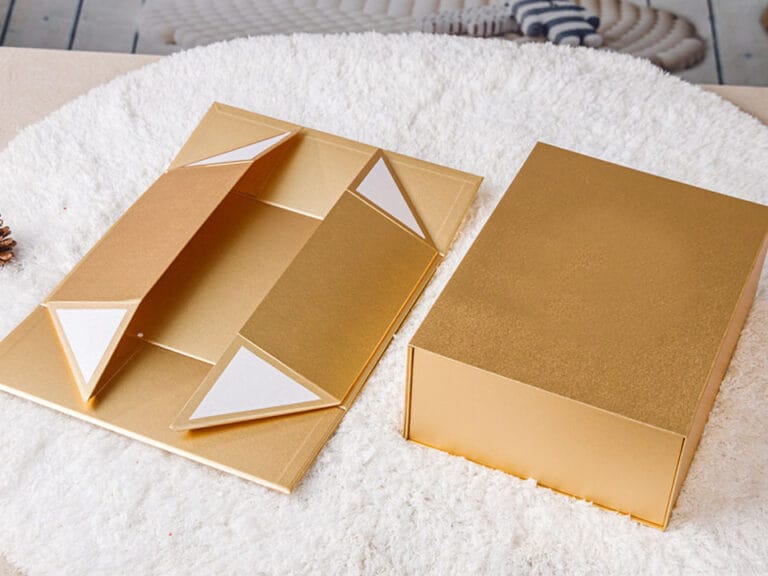
If you want a baseline (before you go full sculpture), look at custom rigid boxes that elevate brand and customer experience and then add “shape” in layers, not all-at-once. That’s how you avoid the classic spiral: “more samples” → “more tweaks” → “more tooling” → “we’re out of budget.”

However—procurement teams still argue like it’s 2019. It isn’t.
The BLS Producer Price Index for setup (rigid) paperboard boxes went from 476.542 (Jan 2023) to 514.241 (Dec 2024), roughly +7.9%, and you can verify that without trusting me: FRED (Setup/Rigid Paperboard Boxes PPI).
Three words for that curve: “quotes move upward.” Or suppliers cut corners (board, wrap, glue), and you “discover” it later when the lid rocks or the corners lift.
But if you sell into Europe—or even ship influencer kits there—don’t be the brand that’s shipping a cathedral-sized box for a watch.
The European Parliament’s March 2024 deal sets packaging reduction targets of 5% by 2030, 10% by 2035, 15% by 2040, and once targets like that exist, oversized, air-heavy luxury rigid gift boxes become an easy political punching bag. Here’s the source (read it, don’t skim headlines): European Parliament: deal on new rules for more sustainable packaging.
And yes, you can still do custom two-piece rigid boxes. I’m not anti-rigid. I’m anti-waste disguised as “luxury.” Those aren’t the same thing.
Yet the most reckless move I keep seeing is “inspired by” packaging—same shoulder profile, same outline, same vibe—because someone convinced themselves that only logos matter. Wrong.
The Supreme Court’s 2023 decision in Jack Daniel’s Properties, Inc. v. VIP Products LLC is a nice cold shower: when design elements act as a source identifier, trademark rules apply, and your “it’s just packaging” line is not a shield. Primary source: Supreme Court slip opinion.
Here’s my blunt advice: if you’re borrowing a competitor’s signature silhouette, stop. Build your own visual system (materials + finishing + structure) instead of playing chicken with legal.
So you want wholesale custom rigid boxes. Cool. Don’t send “matte, premium, nice feel” and expect magic.
From my experience, the factories that do good work love specifics—because specifics reduce rework and screaming emails. The factories that hate specifics? They’re betting you won’t measure anything.
Spec like this (boring on purpose):
And if you’re doing magnets? Call it out. N35 neodymium, placement tolerance, polarity check. Magnets are where “looks fine” turns into “why won’t it close?”
Want examples that force discipline (not mood-board fluff)?

But here’s what suppliers rarely say out loud: your unit price is a cocktail of hand minutes, reject rate, packing method, and freight cube—plus tooling amortization if they think you won’t challenge it.
A “custom” shaped build often means more touchpoints: manual corner-turning, extra press time, more careful wrap alignment, sometimes slower glue set, then extra QC because non-rectangular walls warp more easily. That’s real labor. Real cost.
If you’re comparing die-cut rigid boxes to simpler structures, ask the right question: Which one stays consistent when you run 10,000 units and the factory is tired? Because consistency is what you’re buying. The rest is marketing.
Here’s the filter I use when I’m tired of pretty PDFs.
| Build choice | What it is | Best for | Cost pressure points | Typical failure mode |
|---|---|---|---|---|
| Custom two-piece rigid boxes (lid & base) | Separate lid + base | Chocolate, cosmetics, simple gifts | Board thickness, lid fit, wrap corners | Lid too tight/loose; corner lift |
| Book-style / magnetic closure | Hinge + magnets | Phones, premium electronics | Magnet placement, hinge wrap, extra handwork | Misaligned magnets; hinge cracking |
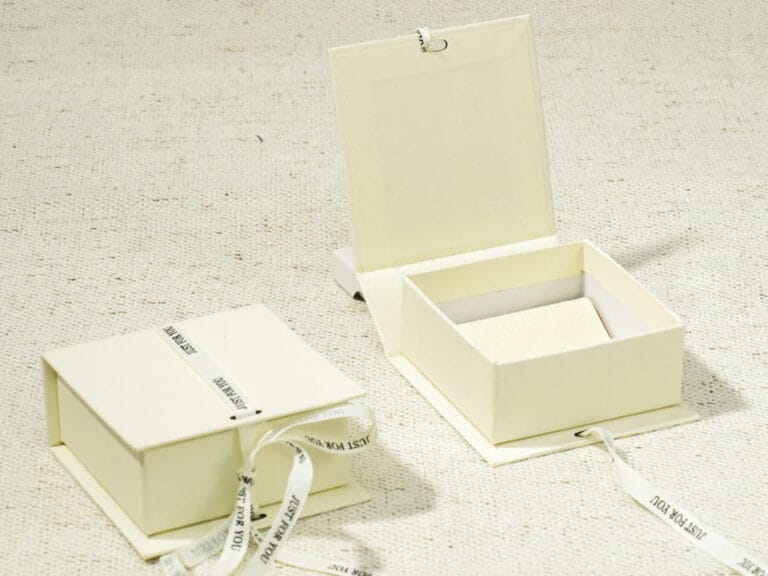
| Drawer (matchbox style) | Sleeve + sliding tray | Jewelry, small devices | Tray friction, ribbon pull, tight tolerances | Tray binds; sleeve scuffs |
| Die-cut rigid boxes (non-rectangular) | Shaped silhouette | PR kits, limited editions | Custom dies, wrap complexity, higher scrap | Wrinkles on curves; shape distortion |
| Shoulder/neck (set-in frame) | Inner neck for premium reveal | Perfume, luxury gifts | Added parts, assembly time | Neck mismatch; wobble |

What are custom shaped rigid boxes? Custom shaped rigid boxes are rigid “setup” paperboard packages made from thick board (often 1.5–3.0 mm) that get wrapped in printed or specialty paper, then engineered into non-rectangular silhouettes—curves, angles, die-cut outlines—so the structure itself signals premium positioning, not just the graphics. Then reality hits: shaping raises tooling, scrap, and handwork (and your first “perfect sample” usually lies).
What’s the difference between custom rigid setup boxes and folding cartons? Custom rigid setup boxes are pre-formed, non-collapsible structures (typically greyboard wrapped with paper) that ship as finished geometry for higher crush resistance and a premium unboxing, while folding cartons are thinner paperboard (often 250–400 gsm) shipped flat and erected at pack-out for speed, automation, and lower freight. Rigid = feel + protection. Folding = scale + efficiency. Pick your pain.
How do die-cut rigid boxes work? Die-cut rigid boxes are rigid setups where board and/or wrap are cut to custom outlines using dedicated tooling (dies, molds, fixtures), and the production sequence must manage grain direction, V-groove accuracy, glue set, and wrap stretch so the final shape doesn’t distort, wrinkle, or telegraph seams under pressure. Plan longer sampling. Demand line-real samples (not photo-shoot samples).
Are luxury rigid gift boxes recyclable? Luxury rigid gift boxes are recyclable when they remain mostly fiber-based (paperboard/greyboard) and avoid hard-to-separate add-ons like plastic windows, heavy metallized films, and glued-in magnets, but recyclability is ultimately a local-systems question—sorting capability, market rules, and how easily components separate determine the outcome. If you’re selling in the EU, assume scrutiny is rising, not falling.
How to design custom shaped rigid boxes for manufacturing? How to design custom shaped rigid boxes for manufacturing means translating the visual idea into repeatable production rules—board thickness, radii, seam placement, wrap direction, tolerance stack-ups, and insert fit—so a factory can hit consistent geometry at scale instead of producing one gorgeous prototype that collapses into scrap during a real run. Start boring (rectangular protection), then add shape where wrap can behave.
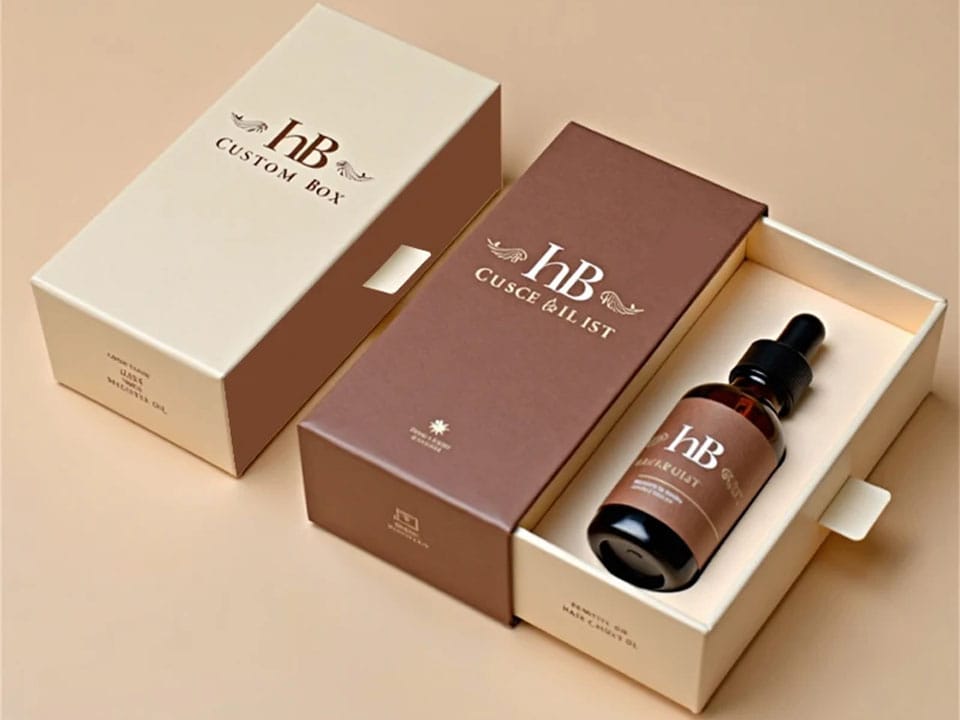
If you’re serious about custom rigid boxes—especially custom rigid setup boxes with odd geometry—stop shopping on vibes and start shopping on specs: board caliper, wrap stock, finish, tolerances, inserts, and QA tests, plus a line-item quote for tooling and packing method. That’s how you get custom shaped rigid packaging without paying a luxury tax you didn’t authorize (and without the “surprise defects” meeting later).