Talk To Our Boss If You Didn't Find The Solution
Our boss, Alanna will ask our team to find out the solution very soon! You must be satisfied with our services!


A PPWR packaging test report is a laboratory document that records what specific packaging materials contained when they were sampled, usually heavy metals and, for some materials, total fluorine. It is not a certificate that a box or a supplier complies with the EU Packaging and Packaging Waste Regulation. Regulation (EU) 2025/40 has applied since 12 August 2026, and importers, brand owners and procurement teams are now asking suppliers for documents. The difficulty is that reports differ widely in scope, and a page full of “not detected” results can still leave the important questions open. This guide explains which PPWR limits a lab report can support, how to read one critically, where its usefulness ends, and what to specify in an RFQ so the documentation you receive matches your packaging.
A PPWR test report proves that named samples, tested by stated methods at one laboratory, showed certain concentrations of the substances measured. It does not prove that a finished box, a product line or a factory meets every PPWR requirement.
That distinction follows from how the regulation allocates responsibility. The Commission’s guidance document on Regulation (EU) 2025/40 explains that manufacturers may only place conforming packaging on the market, that the conformity assessment can be carried out by the manufacturer or by someone acting for it, such as a laboratory, and that the EU declaration of conformity is drafted by the manufacturer using information supplied by its suppliers. The same guidance states that the manufacturer is the sole economic operator legally responsible for the packaging’s compliance with the sustainability and labelling requirements, regardless of who drafted the paperwork.
In practice, a factory’s report is an input to your technical documentation, not a substitute for it. The PPWR’s definition of “manufacturer” can include the company that has packaging designed or made under its own name or trademark, so confirm your own role with a compliance adviser before assuming the supplier carries the obligation.
Timing also matters. According to the European Commission’s announcement of the PPWR’s application, the rules apply in phases. The PFAS restriction for food-contact packaging started on 12 August 2026, a harmonised labelling system follows from 2028, and measures such as empty-space limits and recyclability requirements apply from 2030. Test reports today therefore mostly address substance limits, not the later design and labelling duties.
Two substance rules in Article 5 are directly testable in a laboratory, and they apply to different scopes.
Article 5(4) generally limits the combined concentration of lead, cadmium, mercury and hexavalent chromium in packaging and its components to 100 mg/kg, as EU Law Live’s summary of the regulation notes. The limit is a sum, so a useful report shows each element and the total. It applies to packaging of every kind, food-contact or not, which makes heavy-metal data relevant to almost every box a buyer orders.
Article 5(5) applies only to food-contact packaging. From 12 August 2026, such packaging cannot be placed on the market at or above three limits: 25 ppb for any single PFAS by targeted analysis, 250 ppb for the sum of targeted PFAS, and 50 ppm for PFAS including polymeric PFAS. The Commission’s announcement lists takeaway containers, bakery paper and pizza boxes among the typical uses of PFAS in food packaging.
The guidance adds three practical points for buyers:
The table below is an editorial guide to what is worth requesting, not a statement of legal minimums.
| Packaging type | Evidence worth requesting | Watch-out |
|---|---|---|
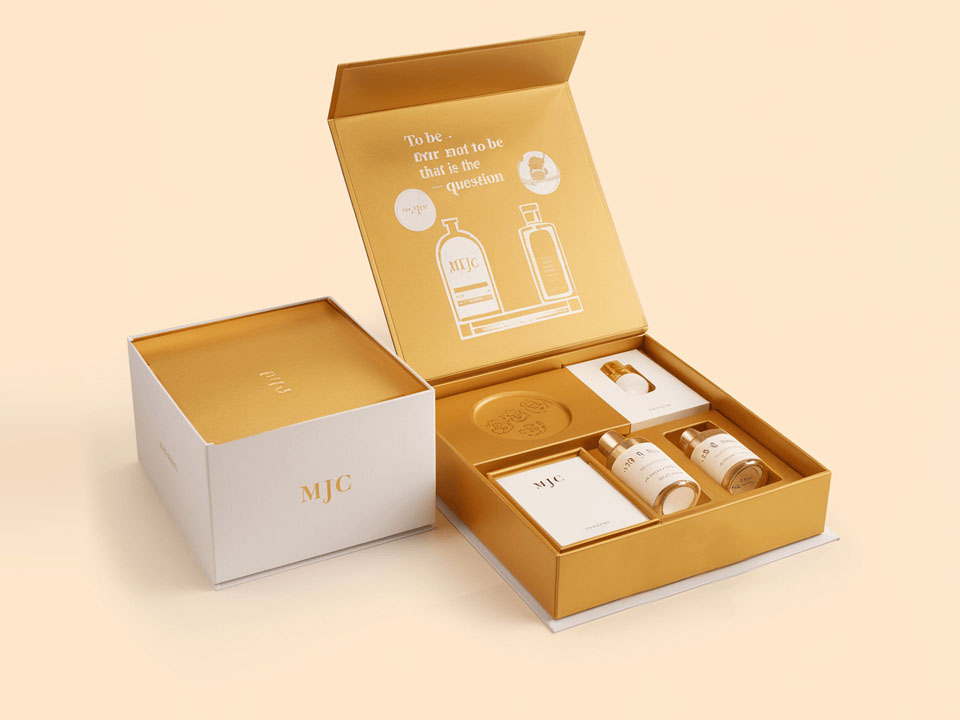
| Non-food rigid gift or cosmetic box (wrap paper, foil, ribbon, magnet) | Lead, cadmium, mercury and Cr(VI) results with a stated sum, ideally for foils, inks and coatings separately | Mixed-sample results can hide a single high-reading component |
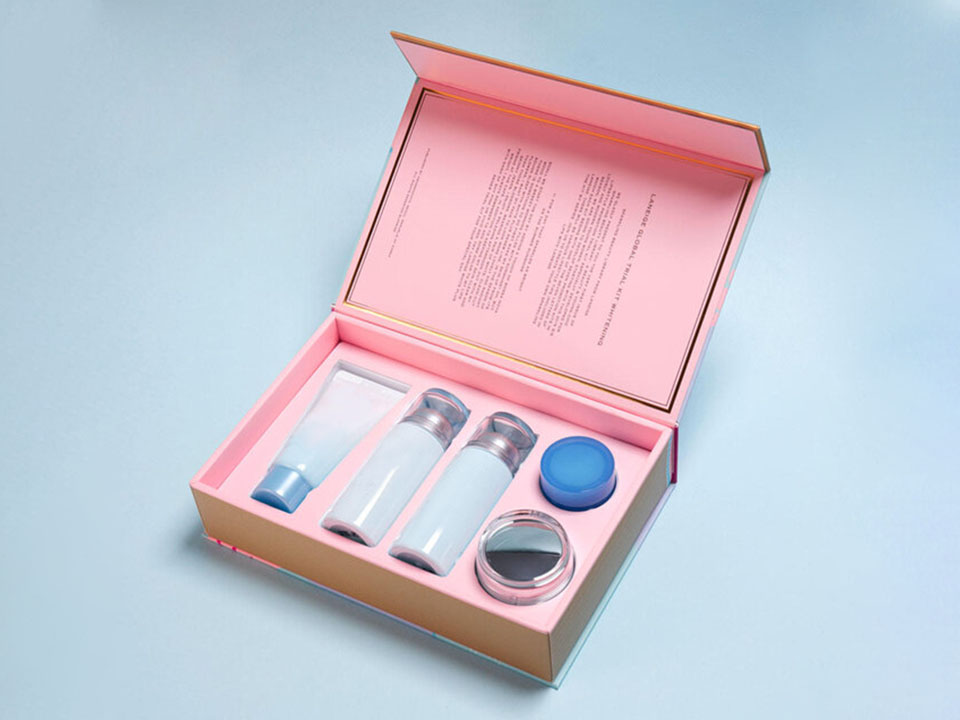
| Box with plastic tray, EVA, PU or PET insert | Heavy-metal results on the insert material as well as the paperboard | Plastics are often left out of “paper packaging” reports |
| Food-contact box, liner, wrap or tray | Total fluorine on the exact grease-resistant paper or coating used, plus heavy metals; follow-up PFAS analysis if fluorine exceeds 50 mg/kg | A fluorine result for white board says little about a barrier-coated paper |
| Printed box with soft-touch film, UV varnish or metallic foil | Heavy metals on the finish as applied, with the coating supplier named | A change of foil, ink or film supplier can change the result |
Check how each sample is described: material, colour, supplier or grade, and whether the lab tested it alone or blended with others. Composite testing lowers cost and works well as a screen, but a blend can average a high-reading component with clean ones. The Zhibang report discussed below carries a lab note that composite results may differ from the content of any single homogeneous material.
“Not detected” means below the method detection limit (MDL), not zero. It is informative only when the MDL sits well below the limit you care about. In the public example, the MDLs are 2 mg/kg for lead, cadmium and mercury, 8 mg/kg for hexavalent chromium and 20 mg/kg for fluorine. These are comfortably below the 100 mg/kg sum and the 50 mg/kg fluorine trigger. A report with an MDL close to the limit gives much weaker assurance.
Compliance with a combined limit depends on the sum. A result can pass and still use most of the allowance. In the example, one mixed sample of gold hot-stamping foils shows 67 mg/kg of hexavalent chromium, under 100 mg/kg but about two-thirds of the budget. That is not a failure. It is a reason to ask for component-level results and to confirm the foil supplier will not change.
Look at which methods were used and whether each parameter falls within the laboratory’s accredited scope. The example report applies IEC 62321 methods to the four metals and EN 14582:2016 with ion chromatography to fluorine. Its footnote marks the fluorine item as outside the lab’s CNAS-accredited scope. That does not make the data wrong, but a buyer relying on it for a food-contact decision should know. Because no harmonised PFAS method exists, ask which protocol the lab followed and whether it matches the Commission’s stepwise approach.
Compare sample-receipt and report dates with your production timeline, and note who supplied the sample information. In the example, the lab states it does not verify sample descriptions provided by the applicant. Ask the supplier to link each tested sample to production materials through supplier names, grades or photographs. Verify the report number and the signature and stamp with the issuing laboratory when the report is going into your technical file.
Zhibang Packaging publishes its PPWR packaging material test report in full, which makes it a useful case for applying the checks above. The 28-page report was issued by Shenzhen Anbotek Compliance Laboratory on 19 August 2026 for 25 numbered samples. They cover paperboards, specialty papers, laminating films, inks, foils, adhesives, ribbons, magnets, and foam, EVA and PET insert materials. The supplier itself states that it is not a certification covering all PPWR obligations.
| Aspect | What the report records | Open question for a buyer |
|---|---|---|
| Heavy metals | Most results not detected; Cr(VI) of 67 mg/kg in mixed gold foils; lead of 9 and 7 mg/kg in a mixed EVA/PET sample and a PET sheet | Individual foil results and supplier consistency over time |
| Fluorine | Three samples screened (mixed lamination films, mixed protective inserts, white cardboard), all below the 20 mg/kg MDL | Greaseproof paper was in the sample list but was not among the three fluorine-screened samples, so food-contact projects need their own screen |
| PFAS depth | Total fluorine screening only | No targeted PFAS analysis, which would matter only if fluorine were found above 50 mg/kg |
| Product level | Material and component samples | No finished-box testing or product-specific conformity documentation |
The example shows what good disclosure looks like and why material-level data needs to be matched to a specific build.

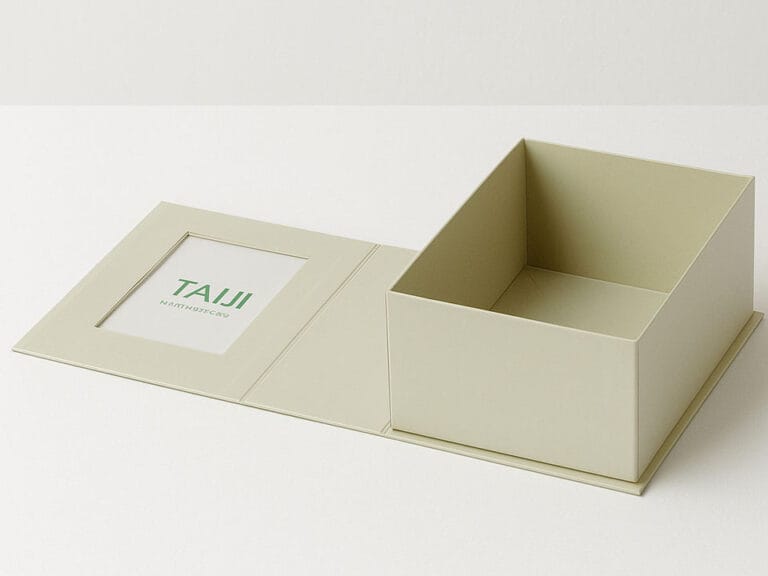
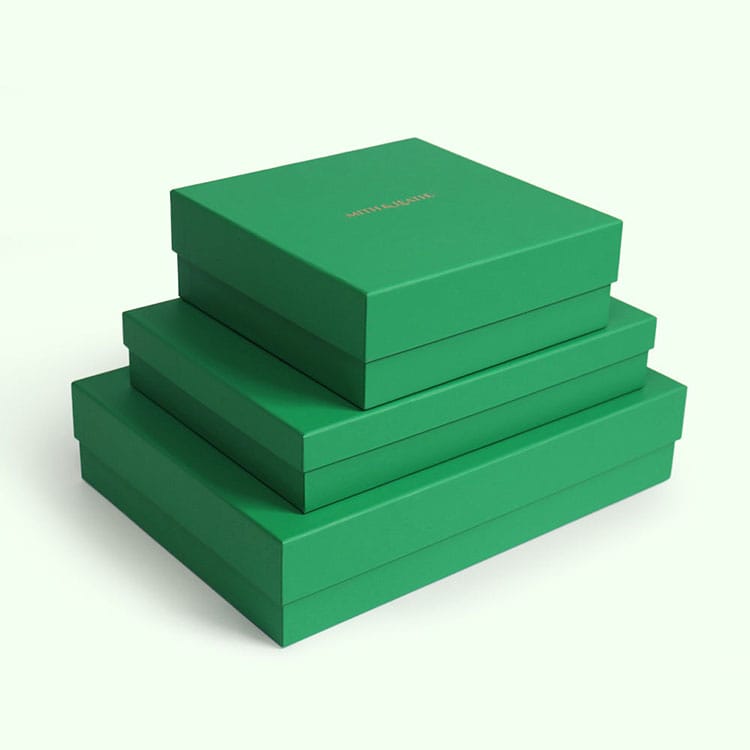
A common assumption is that more “not detected” results mean a compliant product. The qualification is that the PPWR obligation attaches to the packaging placed on the market, and a finished box is an assembly. A two-piece or magnetic-closure rigid box can combine greyboard, a printed wrap, lamination, foil, adhesive, a ribbon, a magnet and an insert. Many of the finishes, including foil stamping, spot UV, ribbons and inserts, are options on the custom rigid boxes range, and each one adds a component that needs evidence. A report on each material tested alone does not confirm the specific combination, supplier lot or colourway you will receive.
The trade-off is cost and time. Testing everything for everything is rarely proportionate. A risk-based approach asks where each regulated substance could plausibly enter the build. For a non-food gift box, the PFAS restriction in Article 5(5) does not apply, so heavy-metal data on foils, inks and plastic inserts matters more than fluorine screening. For a food-contact liner, the reverse priority applies.
Simplifying the material stack also reduces documentation. The guide to sustainable cosmetic packaging solutions describes a lid-and-base box using one board grade, one paper wrap and a paper-based insert as easier to process than a multi-material box with plastic trays and magnets. The recycling benefit is the main point there, but fewer components also means fewer certificates to collect and keep current.
The sources reviewed for this article set no fixed re-testing interval, so the trigger is change. Ask for fresh evidence when:
State the documentation need in the first request, not after sampling. Testing and sample-matching take time. In the public example, samples were received on 3 and 14 August 2026 and the report is dated 19 August 2026, which suggests, in this one case, a turnaround of days to weeks, not hours.
For printed paper gift boxes and similar retail packaging, share artwork and finishing choices early, since the ink, laminate and foil selections drive which results are relevant.
Buyers comparing structures can start from the full range of custom box options and send the bill of materials with the first RFQ. The supplier can then state in advance which documents exist and which need new testing.

No. A test report records measured results for specific samples. It does not certify compliance with every PPWR requirement. The manufacturer remains responsible for conformity assessment, technical documentation and the EU declaration of conformity.
Most cover lead, cadmium, mercury and hexavalent chromium against the 100 mg/kg combined limit. Some add total fluorine screening as a first step for PFAS. Reports should state methods, detection limits and the sum of the four metals.
The PFAS restriction in Article 5(5) applies to food-contact packaging. A non-food gift box falls outside it, although a brand or retailer policy may still request fluorine data. Heavy-metal limits apply to all packaging.
Under the Commission’s recommended enforcement approach, a sample below 50 mg/kg total fluorine could be considered compliant. A higher value needs follow-up to determine whether the fluorine is organic PFAS or inorganic.
No. The declaration is drafted by the manufacturer, using supplier information as input. A supplier report supports the technical file for the materials tested, but it does not cover the finished packaging or your legal role.
For food-contact PFAS limits, the Commission states there is no stock-exhaustion period. Packaging placed on the market after 12 August 2026 must comply, while packaging placed on the market earlier may remain on sale.