Talk To Our Boss If You Didn't Find The Solution
Our boss, Alanna will ask our team to find out the solution very soon! You must be satisfied with our services!


Open a jewelry box the wrong way and even good jewelry looks cheap. Open it right, and a modest pair of earrings can feel like a much bigger purchase than it actually was. That gap — between the product and how it arrives — is the entire job of jewelry packaging design. Simple as that.
This guide is the practical version of that job: which jewelry packaging materials actually survive a warehouse, how jewelry box packaging design choices affect both protection and perceived value, and where branding and sustainability fit into a build your factory can actually produce at volume. If you’re sourcing custom jewelry packaging for a brand that’s scaling past its first few hundred units, treat this as the checklist you wish someone had handed you before the first bulk order shipped.
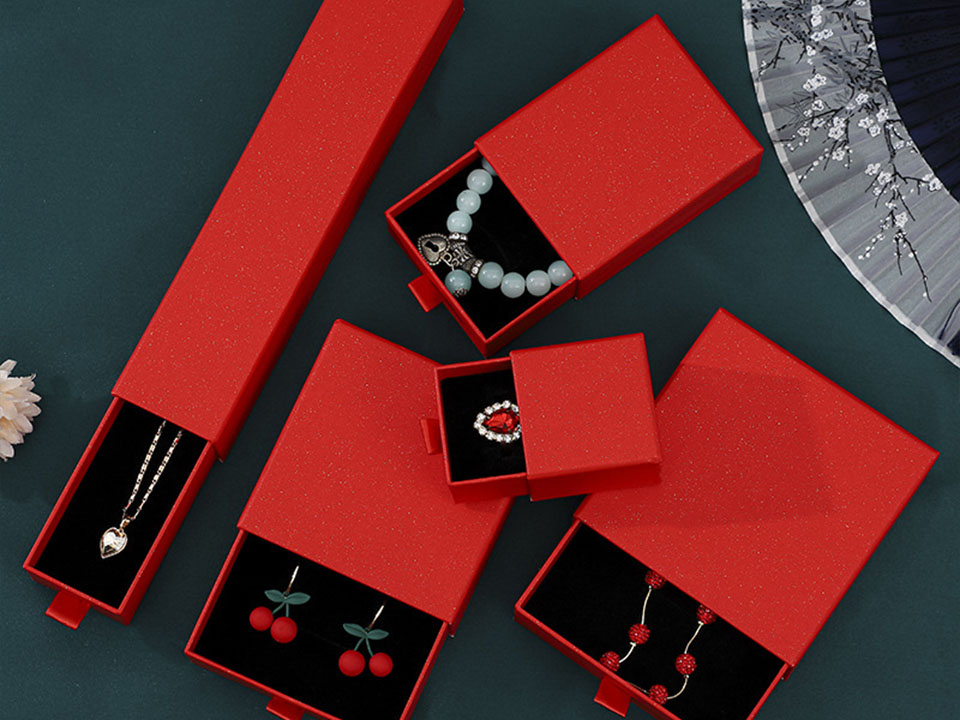
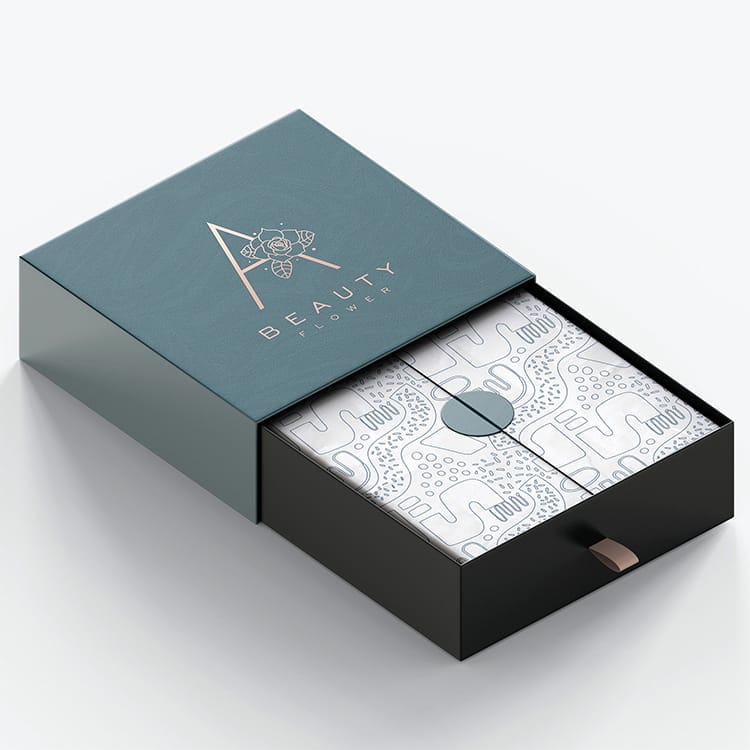
Here’s a number worth sitting with. The global luxury packaging market was worth an estimated $19.68 billion in 2025. According to Fortune Business Insights’ August 2026 report (opens in a new tab), it’s projected to reach $20.65 billion in 2026 and climb to $31.52 billion by 2034 — a compound annual growth rate of 5.43%.
Two details inside that report matter specifically if you sell jewelry. Paper and paperboard made up 36.81% of the market in 2026, and boxes and cartons alone are projected to hold a 42.09% share. The report singles out paper and paperboard as well-suited to premium categories including watches and jewelry, and that’s not a random mention. It’s the material combination most serious jewelry brands already lean on, because it folds into rigid structures, takes foil and emboss finishes cleanly, and doesn’t fight against a premium unboxing moment.
| Metric | Figure |
|---|---|
| Global luxury packaging market (2025) | $19.68 billion |
| Estimated market size (2026) | $20.65 billion |
| Forecast market size (2034) | $31.52 billion |
| Forecast CAGR (2026–2034) | 5.43% |
| Paper & paperboard share of market (2026) | 36.81% |
| Boxes & cartons share of market (2026) | 42.09% |
Source: Fortune Business Insights, August 2026
That growth is real money moving toward better packaging. The harder question for most buyers isn’t whether to invest. It’s where that investment should actually go first, and material is where it starts.
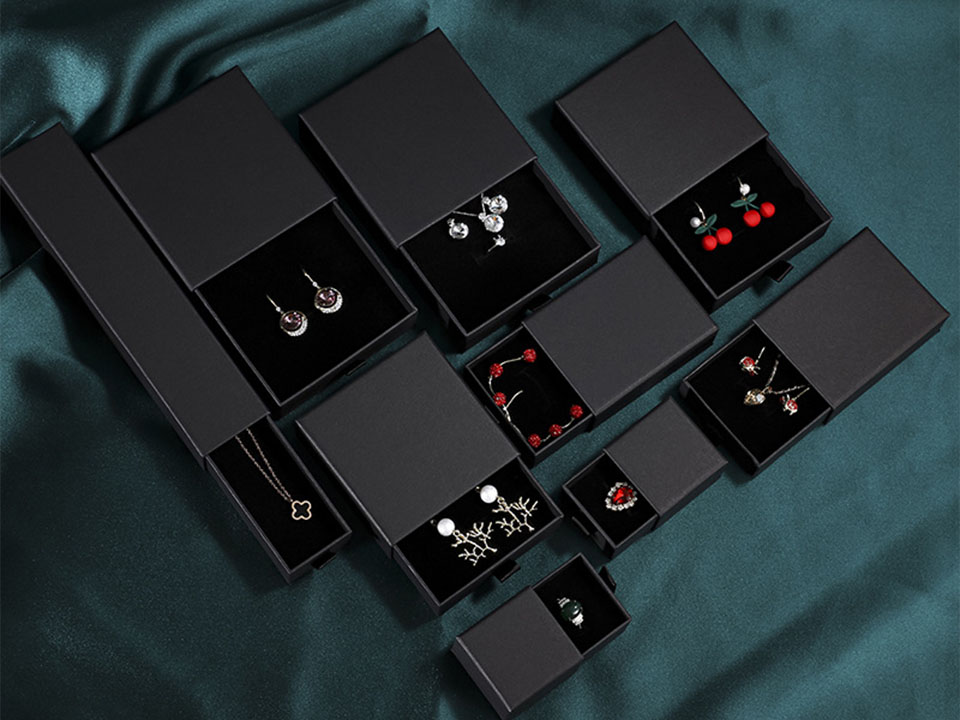
Material choice is where jewelry packaging design projects either get built to last, or start falling apart — sometimes literally. Rigid paperboard, folding carton stock, kraft, velvet-wrapped rigid, and various plastics all show up in jewelry packaging catalogs, and they behave very differently once they leave the sample room.
Rigid paperboard — chipboard core wrapped in printed or textured paper — is the default for a reason. It holds its shape under stacking, takes branding finishes well, and sits squarely in the material category the data above already favors for premium jewelry and watch packaging. Folding cartons cost less and ship flat, which lowers freight and landed cost — useful once your MOQ starts climbing toward container-load territory. What they don’t carry is the same weight-in-hand feel that tells a customer “this was expensive” the second they pick it up.
Plastic shows up too, usually because it’s cheap and lets the product show through without opening the lid. It can work. It can also go wrong in ways that aren’t obvious until months later, which is worth walking through before you commit a full production run to it.
If you’re comparing options for an upcoming order, it’s worth reviewing a full breakdown of jewelry packaging materials before locking in a spec. The difference between a 1200gsm and a 1500gsm board sounds minor on paper. It’s not something you want to discover after the first container ships.
| Material | Strengths | Watch-Outs |
|---|---|---|
| Rigid paperboard | High perceived value, holds shape, wide finish options | Higher unit cost; board weight needs a precise spec |
| Folding carton | Lower cost, ships flat, lower freight | Less weight-in-hand feel; can dent at corners |
| Clear/rigid plastic | Product visibility, low cost at scale | Scratches and hazes with handling; can trap moisture |
| Velvet-wrapped rigid | Premium tactile feel | Can add tarnishing risk in enclosed storage; higher cost |
| Kraft/recycled paperboard | Strong sustainability story, recyclable | Fewer finish options unless laminated |
That plastic-packaging risk isn’t hypothetical. A while back, I came across a thread in an industry forum where a jewelry business owner explained why they’d gone with clear plastic boxes for their line. The logic made sense on paper — clean, modern, let the product speak for itself without a lid getting in the way. The first samples genuinely looked great.
Then came the part nobody plans for. After repeated handling, warehouse storage, and the ordinary friction of shipping and retail display, the clear surfaces scratched and went hazy. By the time the owner noticed, the boxes looked tired enough to actually hurt how the jewelry presented. They suspected — reasonably — that it was quietly costing them sales.
Here’s the part I keep coming back to, though: this was never really a plastic problem. It was a validation problem. The packaging got judged on how it looked in week one, under good lighting, in a clean sample room — not on how it would hold up in month three, after a few rounds of retail handling and a truck ride. I tell buyers this constantly now: test the actual production-intent box, with the actual jewelry inside it, and put it through the abuse it will really face. Abrasion resistance. Insert fit. How much the piece can shift. Surface contact. How the closure holds up after the fortieth open-and-close. All of that matters just as much as the Pantone color or the logo finish. Arguably more.
Here’s an opinion that tends to ruffle feathers in this industry: stacking on velvet, foil stamping, magnetic closures, soft-touch coatings, and thicker rigid board doesn’t automatically buy you the word “luxury.” Half the time it just buys you a fancier-looking quality complaint.
Buyers routinely spend their budget in the wrong order. They lock in the finish first — color, texture, logo treatment — and treat protection like something the insert foam or velvet tray will just handle on its own. It should go the other way. The first priority is protecting the jewelry itself: secure insert geometry, low-abrasion contact surfaces, material compatibility, and transport performance that survives more than one gentle handling under studio lights.
Material compatibility deserves more attention than it usually gets, especially with silver. Silver reacts with sulfur-containing gases in the air, and conservation guidance specifically flags that materials like rubber and certain textiles can contribute to tarnishing when a piece sits enclosed with them for weeks or months — which is exactly the situation a boxed necklace sits in on a retail shelf or inside a shipping carton. A gorgeous, foil-stamped box that lets a necklace tangle, a ring shift and scuff, or a silver-plated piece tarnish inside its own packaging isn’t premium. It’s a return waiting to happen.
Good jewelry box packaging design starts on the inside, not the outside. Insert cavities cut to the actual piece, not a generic mold. Fabric and foam chosen for compatibility with the metal and stones involved, not just for how plush it feels under a thumb. Decorate the outside second, once the inside is already doing its job.
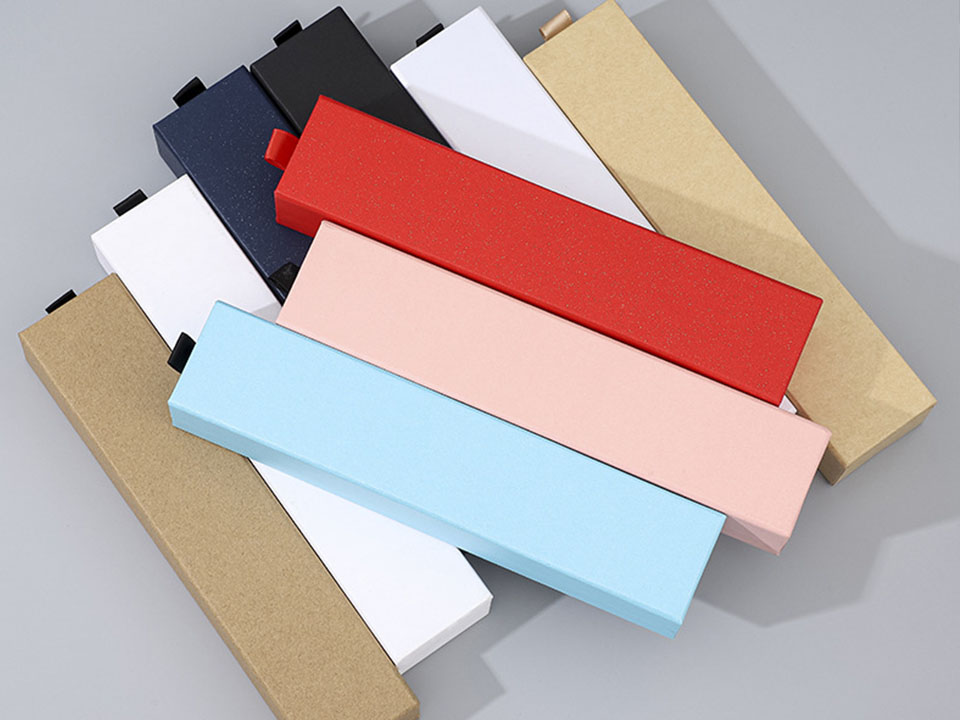
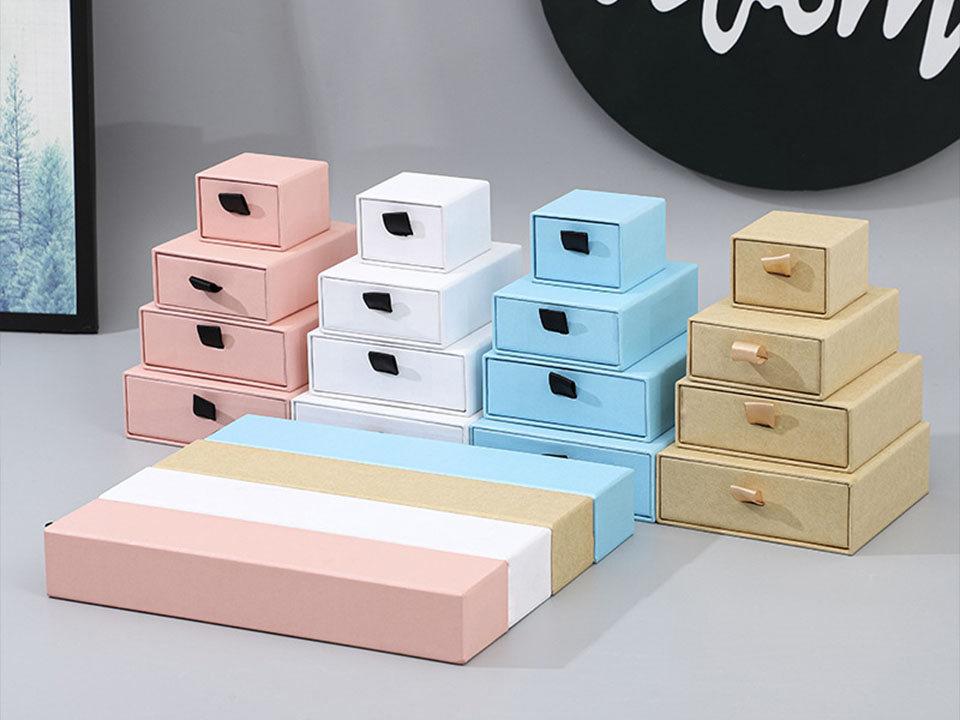
So what does “luxury” actually mean on a spec sheet? Not velvet for the sake of velvet. It means engineering and finish consistency that holds up under scrutiny: tight tolerances on the drawer or lid fit, no visible glue lines, consistent foil registration run after run, and a closure — magnetic, ribbon-pull, drawer-slide — that still feels smooth on unit ten thousand, not just unit one.
It also means restraint. Some of the most expensive-looking luxury jewelry packaging on the market isn’t the busiest. A textured, low-sheen surface with a single debossed logo and a clean magnetic close often reads as more expensive than a box covered in metallic foil, simply because restraint signals confidence. Pair that finish discipline with the structural priorities from the last section — real insert engineering, real material compatibility — and you get packaging that photographs well for the unboxing video and survives the supply chain that got it there.
Branding on a jewelry box has one job beyond looking good: staying recognizable even with the logo covered up. That sounds like a strange goal until you think about how customers actually interact with packaging today — repeat buyers, unboxing videos, gifting occasions where the box gets photographed nearly as much as the jewelry inside it.
A consistent color story, a signature insert card, a specific ribbon or closure style — these become shorthand for a brand faster than the logo itself does. Insert cards are underused here. A well-built branded jewelry packaging system uses that card for care instructions, authenticity details, or a short brand story. That does double duty: it’s functional information the customer actually needs, and it’s another branded touchpoint that doesn’t rely on foil stamping to register.
One small, practical note from the sourcing side: keep branded elements on the components that are cheap and fast to update — insert cards, tissue, ribbon — and keep the expensive, long-lead-time tooling, the box structure itself, more neutral. Seasonal campaigns and rebrands happen. Retooling a die line every time they do gets expensive fast, and it slows your lead time right when you need speed the most.
Sustainability in packaging used to get pitched as a cost center — something brands absorbed because customers expected it, not because it paid for itself. The data increasingly says otherwise.
McKinsey’s 2025 Global Packaging Survey polled 11,136 consumers across 11 countries and found that a meaningful share say they’re willing to pay more for sustainable packaging, though willingness swings hard by market — from roughly 40% in Japan up to 85% in India. The full McKinsey survey (opens in a new tab) breaks the numbers down country by country, but the pattern that matters most for jewelry brands is this: younger consumers, Gen Z and millennials specifically, and higher-income consumers report the strongest willingness to pay a premium. That’s a demographic a lot of jewelry brands are already chasing for other reasons entirely.
There’s a catch worth saying plainly. The same research found that consumers mostly assign responsibility for sustainable packaging to brand owners and packaging producers, not to themselves. Translation: customers expect the industry to have already solved this. They’re not asking to opt in. They’re assuming it’s handled.
Paper-based sustainable jewelry packaging has an advantage here that’s easy to undersell: the recycling infrastructure already exists, right now, at scale. The European Paper Recycling Council’s 2024 monitoring data puts the EU-27 recycling rate for paper and cardboard packaging at 83.1% (opens in a new tab), ahead of every other packaging material category the report tracks, with the broader European recycling rate for paper products holding above 75%. That’s not a promise about some future circular economy. That’s infrastructure that’s already collecting and reprocessing fiber packaging today.
Before you commit to a full production run of custom jewelry packaging, run the box through this list — the actual production-intent unit, not the sample:
None of this takes long. All of it is cheaper than a return, a bad review, or a reorder because the first batch didn’t hold up.
Put it all together and the throughline is simple: sequencing beats spending. Protect the piece first. Get the material spec right for how the box will actually be handled. Then layer branding and finish on top of a structure that already works. Buyers who get that order right generally spend less on returns and quality complaints than the ones chasing the flashiest finish on the sample table — and their packaging still looks good on day ninety, not just day one.
A few quick answers to the questions that come up most in sourcing conversations:
Jewelry packaging design is the process of engineering and styling the boxes, inserts, and finishing that hold and present jewelry, balancing physical protection, brand identity, and the unboxing experience in a single build.
It covers everything from board weight and insert geometry inside the box to foil stamping, color, and closure style on the outside — and it has to hold up at both the design-review stage and the production-line stage.
Rigid paperboard and folding cartons generally perform best for jewelry packaging, since they hold their shape, take branding finishes cleanly, and suit premium presentation better than most plastic alternatives.
Paper and paperboard also carry the added benefit of an established recycling infrastructure, which increasingly matters to both retail buyers and end customers.
Luxury jewelry packaging comes down to engineering consistency and finish discipline — tight tolerances, dependable closures, and protective inserts — rather than simply the amount of velvet, foil, or soft-touch coating used.
Restraint often reads as more expensive than heavy ornamentation, especially when it’s paired with a structure that protects the piece correctly.
Not necessarily. Paper-based sustainable jewelry packaging is often cost-comparable to non-sustainable alternatives at scale, and a large share of consumers say they’re willing to pay more for it regardless.
Willingness to pay a premium varies significantly by country and demographic, but the underlying material — paper and paperboard — already benefits from a mature, high-volume recycling system in markets like the EU.
Test the actual production-intent box, loaded with the real jewelry, through repeated handling, an abrasion test, and a simulated shipping cycle before approving a full production run.
Looking good in the sample room under studio lighting says very little about how a box will look after weeks in a warehouse and a truck ride. Those are two different tests entirely.
Yes. Certain enclosed packaging materials, including rubber and some textiles, can contribute to tarnishing on silver jewelry, so material compatibility inside the box matters as much as cushioning does.
This is one more reason insert and lining materials deserve the same scrutiny as the box’s outer finish, particularly for pieces that will sit boxed for extended periods before sale.